Now through October 31, we're waiving application fees for all freshman and transfer applicants!
*Common app code: Central27
For Deborah Gray, golf is about more than a game
Gray’s research explores how accessibility and relationship-building shape professional opportunity for women in business
Some business relationships begin in conference rooms. Others develop over four hours walking a golf course. For Deborah Gray, professor of marketing at Central Michigan University, that reality helped spark years of research, teaching and outreach centered on one question: Who has access to the informal spaces where professional relationships are often built and who gets left out?
Gray began golfing in her 30s after deciding to join a local women’s league, assuming the sport would come naturally. Instead, the experience opened her eyes to how unfamiliar and inaccessible golf could feel for many people, particularly women and students who did not grow up around the sport.
“I would try and find women to golf with, and realized very few women golfed,” she said. “And then I just started observing, ‘I’m golfing today. Where are the women?’”
That question eventually evolved into a larger research focus examining the relationship between golf, networking, and professional advancement. Over time, Gray began exploring how access to relationship-driven spaces can shape career opportunities, confidence, and visibility in business environments.
Her recent research, published in the Journal of Sport and Social Issues, examines what she and her co-authors describe as the “grass ceiling”—the structural and cultural barriers that continue to influence who feels welcome in golf spaces and who benefits from the professional relationships often formed there.
The research points to the longstanding connection between golf and business networking while also highlighting the gender imbalance that still exists within the sport. Women currently represent about 28% of golfers, despite golf’s continued influence in corporate culture and executive networking.
Gray said the issue is often less about ability or interest and more about familiarity, confidence and access.
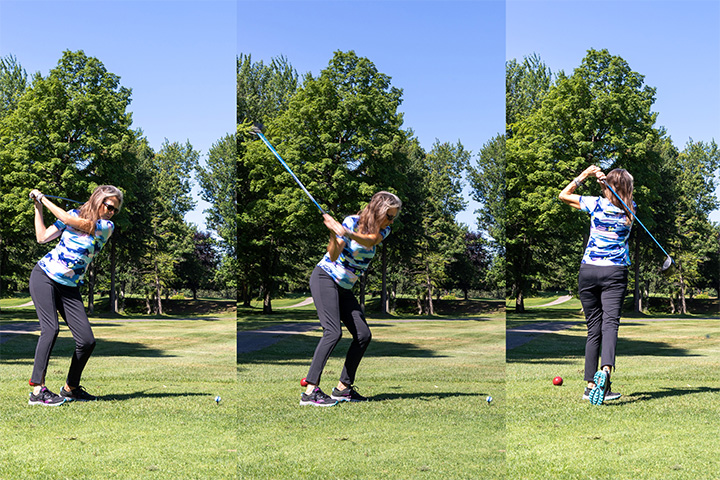
“We can’t assume that students know golf is connected to business,” she said.
She has also become increasingly aware of the socioeconomic barriers tied to the sport. Many students who already golf were introduced to it through family connections, access to leagues or youth participation opportunities that are not equally available to everyone.
“A lot of this work comes back to access and confidence,” Gray said. “If students haven’t grown up around golf or similar networking environments, it can feel difficult to know where to start. I want students to feel like those spaces are approachable and open to them too.”
Those experiences have continued shaping how Gray approaches both her research and her teaching. While she strongly believes golf can provide meaningful networking opportunities, she is careful not to frame it as the only path to professional networking.
“If golf isn’t your thing, let me help you find your thing,” she said.
That perspective has become central to her work. Rather than focusing only on the game itself, Gray emphasizes the broader importance of relationship-building and helping students feel confident navigating professional spaces that may initially feel unfamiliar or intimidating.
Her research and expertise have recently drawn broader attention through features connected to The Wall Street Journal and Costco Connection, where she discusses golf networking, accessibility and strategies for helping more women feel welcome in the sport.
The same emphasis on connection and engagement also shapes Gray’s teaching philosophy. Recently recognized with the Rogers MBA Excellence Award, Gray teaches primarily within CMU’s online MBA programs, where she focuses heavily on creating a strong sense of teaching presence and personal connection for students learning remotely.
“I think it’s very easy in an online class for students to disengage and not feel connected to it,” Gray said.
To counter that, she intentionally builds communication and outreach into her courses through regular emails, hands-on support, and individualized check-ins with students who appear to be struggling or disengaged.
“When I see a student who isn’t participating, I will send them an email and say, ‘Hey, I noticed you weren’t in class. You haven’t been engaging very much. What can I do to help you?’” she said.
Gray believes success in online learning environments requires many of the same skills students will need in remote and hybrid workplaces: self-direction, communication, consistency, and initiative. She often encourages students to think about online coursework not simply as a delivery format, but as preparation for modern professional environments.
“I try to present my courses as just that,” Gray said. “Do you want a remote job? Here’s a skill you’re going to have to learn. Practice it in my class.”
Whether she is researching networking dynamics on the golf course, designing learning experiences for online MBA students or encouraging students to step outside their comfort zones, Gray’s work consistently centers on the same idea: meaningful opportunities often begin with connection.
For Gray, golf was never really just about the game itself. It was about understanding where connections and opportunities intersect and helping more students feel prepared to step into those spaces.

Related News


Kennedy Burns shares marketing lessons with CMU students
October 19, 2026
Kathy Litwiller keeps the details moving and the door open
October 16, 2026
CBA week in Pictures: October 12th - 16th, 2026
October 16, 2026
BELONG Peer Mentorship Program helps students find connection
October 15, 2026