CMU launches 2026 Campus Climate Survey
October 13, 2026
Now through October 31, we're waiving application fees for all freshman and transfer applicants!
*Common app code: Central27
Florida trip builds leadership through hands-on conservation
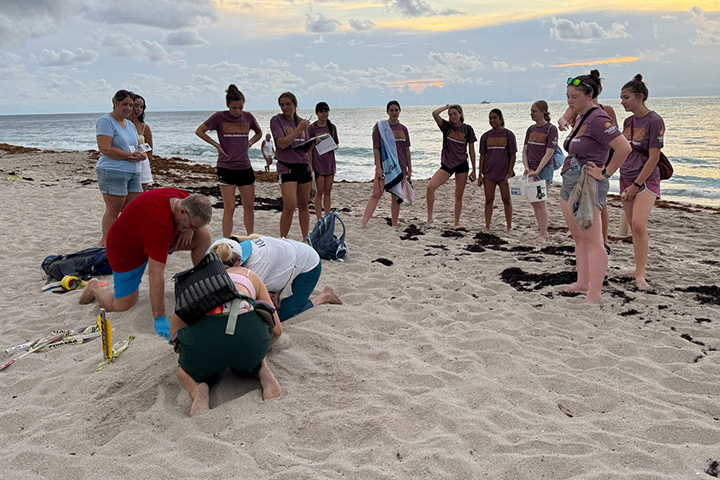
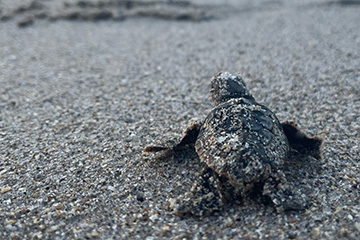
Sea turtle hatchlings crawled from their nests to the ocean, marking a critical step in sustaining the global sea turtle population. Students witnessed this during an Animal Endangerment Alternative Break.
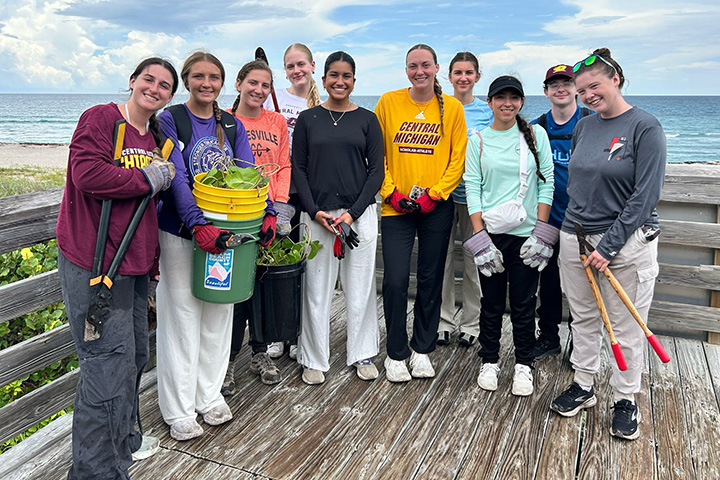
Mallory Morrison, a junior, and Tiana Palmer, a senior, led eight students on an alternative break in Singer Island, Fla., this past summer as site leaders.
Beforehand, Morrison and Palmer led eight weekly presentations to prepare the attendees. As site leaders, they also controlled the schedule and budget.
“As site leaders, we’re just in charge of making sure everything goes smoothly while we’re there,” Morrison said.
Volunteers set off for Florida in early August. They stayed until Aug. 9.
They partnered with Singer Island Sea Turtles, Loggerhead Marinelife Center and the MacArthur State Park.
Their duties included walking the beach to look for turtle nests, conducting sea turtle hatchling surveys, and picking up trash and other debris. Due to the nature of sea turtle conservation, they couldn’t touch anything.
“We would spot tracks or pick up trash when we were digging up wooden stakes and we could carry their equipment,” Palmer said.
Morrison, Palmer and the other students witnessed baby sea turtles hatch, come out of the nest and crawl to the sea. Injured sea turtles were taken to the Loggerhead Marinelife Center.
At MacArthur Beach State Park, students cleaned the beaches and mangrove. To improve the habitats and nature, they planted trees. Once that was done, students volunteered at Loggerhead Marinelife Center.
“We did more beach cleanup, sorted the trash and invasive species removal as well,” Morrison said. “Some days, we were doing services with all three community partners starting at 6 a.m. and we weren’t getting done until after 5 p.m., followed by an hour drive home. We did a lot of sleeping in our free time because we were tired after a 30-hour drive down.”
Besides volunteering, they snorkeled under the Blue Heron Bridge in Riviera Beach, Florida and walked a historical trail tour.
“We also all went out to dinner at one of the local restaurants one night and (one of the volunteers) hosted us for one night too,” Palmer said.
Morrison loved seeing the baby sea turtles and sunrises on the beach in addition to the connections she made. She also loved seeing the group grow closer.
“Having this positive experience and getting to learn and grow while becoming friends was really amazing,” Morrison said.
Learning about the impact the volunteers made in Florida was the most rewarding part for the volunteers and site leaders.
“(Our lead volunteer) taught us why it’s important to fill in your holes at the beach and make sure you’re not leaving trash that could possibly cause harm to sea turtles,” Palmer said. “Learning those small changes was so impactful.”
“At MacArthur, they don’t get a ton of volunteers, so all the work that we did there, they were super super appreciative of, especially the mangrove cleanup. We were there for 30 minutes and walked out with over 10 bags full of trash,” Morrison said.
Student volunteers explored only a small portion of the mangroves that stretched out for miles. Unfortunately, MacArthur has little help to do that job since it’s a difficult task.
At Loggerhead as well, the volunteers weighed all of their trash at the end of the week, resulting in a cleaned-up trail that was not visible.
“For the education component, some of the more tangible things we saw that made an impact, and the gratitude we received was really amazing,” Morrison said.
Morrison came to Central for this exact reason: the Alternative Breaks. She arrived at Central undecided and came across an AB tabling. She soon saw the sea turtle AB and quickly made her college acceptance decision.
“I need that, I love animals and volunteering,” she said. “Hopefully I’ll get to go on turtle break and I was assigned turtle break on my second site leading position, I was so excited!”
In the future, Palmer will apply her people skills and knowledge. She has been educating her family about beach etiquette, like knocking down sandcastles and filling in their holes.
“AB teaches leadership alongside collaboration, which is something that I don’t feel like I’ve had a ton of experience with,” she said. “It was a lot of adaptation and staying cool under the pressure and participating alongside the group instead of just leading them.”
“I feel like with leadership skills, we’re in a very unique position where we get to lead our peers. Like the ins and outs of that are really beneficial to having a career setting,” Morrison said.
Morrison, who led a previous AB, will lead another group this summer. Turtle break capped Palmer’s AB experience. She graduated in May.