Business students can apply now for CBA scholarships
October 9, 2026
Now through October 31, we're waiving application fees for all freshman and transfer applicants!
*Common app code: Central27
Keaton Loebrich finds his passion in The Last Frontier
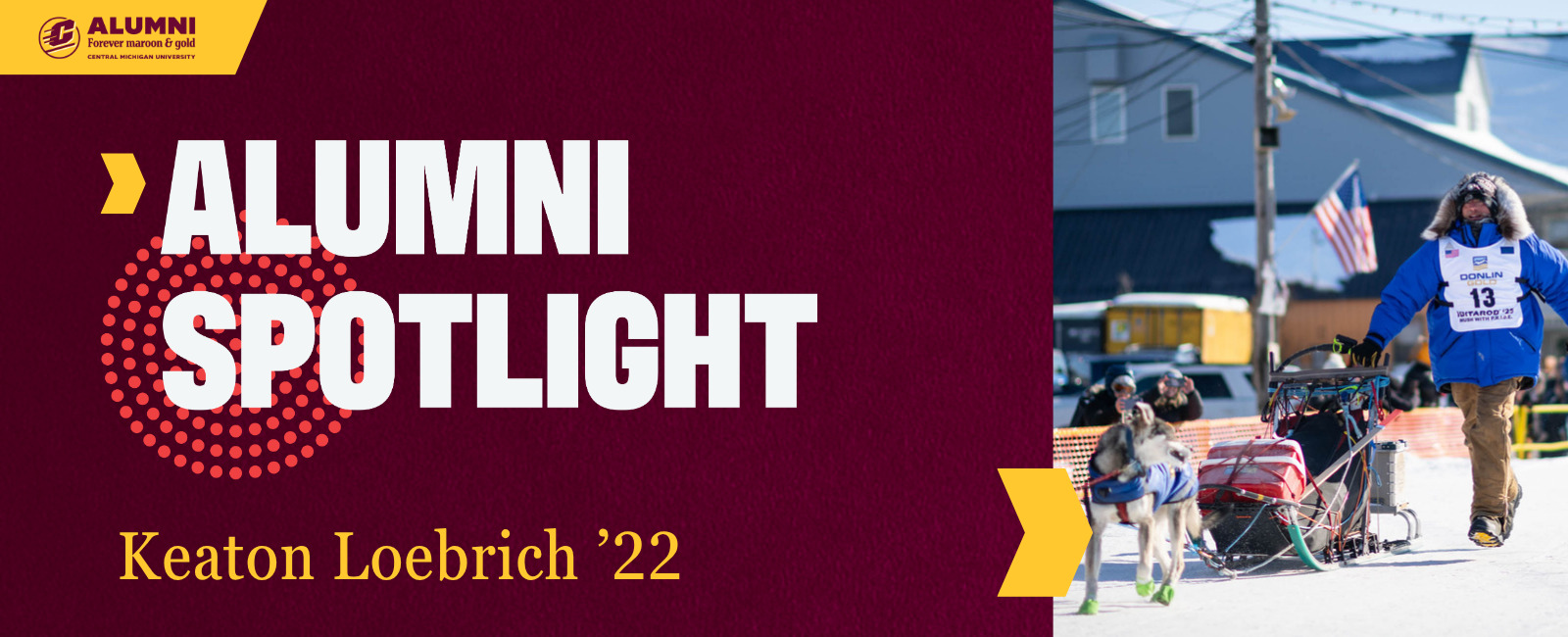
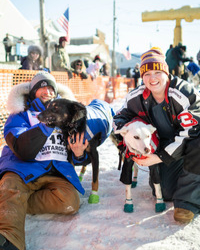
Keaton Loebrich, ’22, feels somewhat obligated to explain his life choices to his CMU finance professors.
Trained to track assets and liabilities, revenues and expenses, the 32-year-old former Marine acknowledges that moving to Alaska to live off the grid and race dogs in the Iditarod might not appear to be the smartest decision.
“I can pull up the Excel file and show you exactly how far in the red we are,” Keaton said. “This is absolute insanity. There’s no return on investment whatsoever.”
Since earning his degree, however, Keaton has learned not everything of value can be balanced in a ledger.
“We’ve got enough to do what we do, and that’s all we care about,” Keaton said.
He and his wife, Erika, love hauling potable water 40 miles to their home, splitting wood all summer to burn through the winter, and periodically firing up the generator to shower or check email. And of course, they love their 25 Alaskan Huskies.
In spring 2021, before his senior year at CMU, almost on a whim, Keaton applied for a job giving Jeep tours near Denali National Park. He flew to Anchorage, and after the eight-hour train ride to Denali, he knew Alaska would become home.
Within a week, he knew he would marry his new coworker, Erika. Then he met four-time Iditarod champion Jeff King and became intrigued with dog mushing.
He returned to Michigan that fall for his last two semesters, and the day after commencement, he and Erika climbed into a packed RV and headed to Fairbanks.
“There are very few places where you can go as far as you want and not see evidence of people,” Keaton said. “The mountains, the wildlife, the sunrises that blend into sunsets … This is the most beautiful place.”
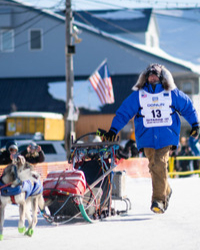
With guidance from King, Keaton and Erika founded Star Gazers Racing and began preparing for the Iditarod. They started with 14 dogs rehomed from other mushers.
Keaton, a Midland native, lined up with 32 other mushers in March for the 1,128-mile race from Fairbanks to Nome. He and his team of Alaskan Huskies finished 17th in 13 days.
It was one of the hardest things he’s ever done, but there was no hesitation to register for the 2026 race.
“It’s unlike anything else, being out there with a team of dogs in the middle of nowhere when the northern lights come out ... and when you cross that finish line, it’s a high unlike any other. You feel like you’re capable of just about anything.”
“In every crazy situation, the dogs are looking at me for my reaction. If I act calmly, the dogs think ‘oh, this is nothing, we'll just do what he's doing and carry on’."
Keaton Loebrich, '22