Business students can apply now for CBA scholarships
October 9, 2026
Now through October 31, we're waiving application fees for all freshman and transfer applicants!
*Common app code: Central27
National expert challenges CBA students to rethink power, perception and responsibility
Leaders can do incredible good—and incredible harm.
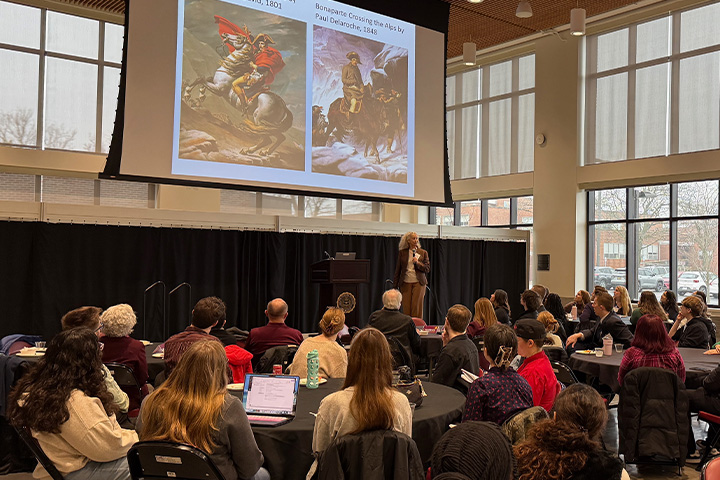
That was the central message at the College of Business Administration’s fifth annual Ethics Summit, where Joanne Ciulla, Ph.D., professor and director of the Institute for Ethical Leadership at the Rutgers Business School, presented “The Obstacles of Ethical Leadership.”
“I don’t study ethical leadership,” Ciulla told the students. “I tend to study more about unethical leadership, the question, why is it difficult to be ethical when you’re a leader?” Her research, spanning nearly 40 years, examines what she calls the magnified nature of leadership.
“When they do good, they do very good, and when they do badly, they do very badly,” she said. “It's morality magnified.”
Those perceptions matter. Ciulla referenced research showing that even children can predict election outcomes based solely on candidate photos—highlighting how leadership is often judged by appearance and symbolism before performance.
But beyond perception lies a deeper challenge: the tension between ethics and effectiveness.
“If you had a choice, would you want somebody who was highly ethical or somebody who was highly effective?” she asked. In her experience working globally, the answer is often effective.
“It wasn’t even a challenge. They all wanted somebody who was highly effective.”
That tension plays out in business as well. Do organizations prioritize performance, even if it comes with ethical gray areas? Or do they hold firms to ethical standards, even when results may take longer?
For Urtnasan Bat-Erdene, a sophomore accounting major from Ulaanbaatar, Mongolia, the summit offered a new lens on those questions. “I wanted to learn and felt motivated by her message. I am also interested in leadership, and learning about good ethics in business,” she said.
Her goal going in was clear.
“I want a new perspective on ethics; and a mindset shift on the potential of doing good business ethics.”
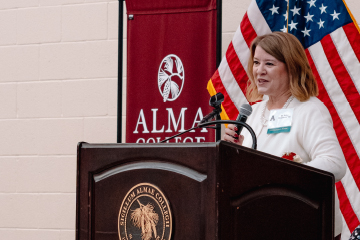
Amy McGinnis, director of student experience at the HUB, said the event reflects the HUB’s mission to bring students together meaningful, experiential learning.
“Getting students together to learn about why ethical leadership is important and powerful. It is important to learn from an expert. Learning how to navigate obstacles in a better way helps us make better ethical decisions and reinforce what students are learning in the classroom.”
She hopes students leave better prepared to handle real-world pressures.
By examining the obstacles leaders face—from public perception to performance pressure—the Ethics Summit reinforced a core message for future business professionals: ethics is not separate from leadership. It is amplified by it.
As Ciulla’s presentation made clear, leadership does not change what is right or wrong—it raises the stakes.