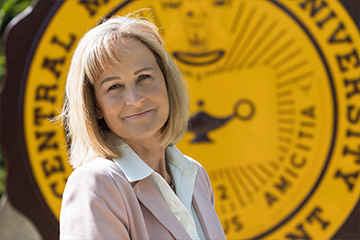
Kathy Litwiller keeps the details moving and the door open
October 16, 2026
Now through October 31, we're waiving application fees for all freshman and transfer applicants!
*Common app code: Central27
Why financial literacy matters for students now and in the future
Financial literacy is one of the most important life skills students can develop during their college years. Understanding how to budget, manage credit, save, and invest allows individuals to make informed decisions that support long-term financial stability.
For many students, college is the first time they take full responsibility for their finances. Expenses such as tuition, housing, transportation, and daily living costs require thoughtful planning. Developing simple habits, such as tracking spending, creating a budget, and setting savings goals, can help students build a strong financial foundation early.
At Central Michigan University’s College of Business Administration, financial literacy is viewed as both a practical life skill and an essential component of business education. Through coursework, mentorship, and experiential learning opportunities, students are encouraged to develop financial awareness and confidence in their decision-making.
“Financial literacy is essential for students across all majors. Professionally, it enables them to understand how their roles impact financial outcomes, which are central to organizational success,” said Claudine Salgado, finance faculty mentor in the College of Business Administration. “Personally, knowledge of financial planning helps students develop realistic and well-defined short- and long-term goals, allowing them to identify the steps needed to achieve their financial objectives
Faculty emphasize that financial literacy goes beyond understanding numbers. It also involves developing the critical thinking skills needed to evaluate financial decisions and consider long-term outcomes. Whether managing personal finances or preparing for a professional role, the ability to analyze financial information and understand risk plays an important role in success.
Experiential learning opportunities help reinforce these skills. Many courses incorporate case studies, financial analysis projects, and real-world applications that allow students to connect classroom knowledge with practical financial decision-making. Student organizations and competitions further enhance these experiences by encouraging collaboration, analysis, and communication.
Students often find that improving financial literacy begins with simple, everyday habits.
“The advice I would give to anyone starting to manage their own finances is to start tracking their expenses and to prioritize certain aspects of your financial life that are important to you,” said Dylan Gergely, a senior majoring in personal financial planning and finance from Woodhaven, Mich. “If you track your expenses, you can better adjust your budget when money gets tight and prioritize what is important in your financial life. I would also recommend prioritizing debts and understanding the opportunity costs of different financial decisions. For example, if you can get 10% on average from investing in the stock market annually, but if you have a credit card debt at 24%, it might be a better use of your money to pay that down first.”
Understanding financial concepts early can also help students prepare for the future. Learning how interest works, using credit responsibly, and beginning to invest early are examples of financial decisions that can have long-term impacts.
Another key habit students highlight is starting early with investing and building consistency over time.
“One financial habit every college student should develop early is investing in a Roth IRA. Starting early lets your money grow tax-free, and even small contributions can add up a lot over time because of compounding,” said Christian Whipple, a senior majoring in personal financial planning from Muskegon, Mich. “Being from a small rural town and having worked in the financial planning industry for the past three years, I’ve seen how powerful it is to start early and stay consistent. IRAs are easy to set up, and you can literally contribute the cost of eating out once per month and it will make the biggest difference.”
Improving financial literacy is an ongoing process. By asking questions, seeking guidance, and taking advantage of available resources, students can gradually build the knowledge and confidence needed to make thoughtful financial decisions.
At the CBA, students are supported by faculty mentors, collaborative learning environments, and real-world opportunities that help strengthen their financial skills.
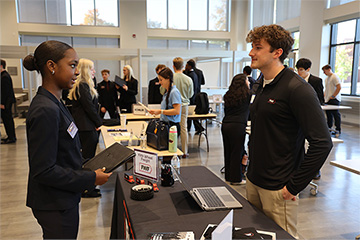
The Financial Planning Association RSO will host a Financial Planning Competition on April 24, where students will showcase their skills in a competitive, hands-on setting. A career fair for students interested in financial planning and related fields will also take place that day.
Students are encouraged to attend and support the competition. Students can register for the career fair through April 9.
As they continue their academic and professional journeys, financial literacy remains an important foundation, one that empowers students to make informed decisions and prepare for long-term success.