The week in photos: October 19-25
October 27, 2026
Now through October 31, we're waiving application fees for all freshman and transfer applicants!
*Common app code: Central27
2026 State of the University Address also focused on change and care
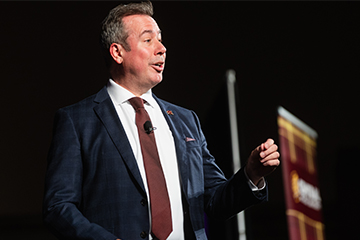
Central Michigan University President Neil MacKinnon delivered the 2026 State of the University Address Wednesday, October 28, in Plachta Auditorium. He focused on three themes: student success, innovation and change, and a culture of care. He began and concluded his presentation by saying the state of CMU is resilient and well-positioned for the challenges of tomorrow. Over the course of the address, MacKinnon also invited three guests to discuss their experiences as a student, staff member and faculty member.
President MacKinnon described several initiatives designed to support student success at CMU, starting with the Go Grants program. He said two rounds of funding totaling nearly $1 million have fueled exciting and valuable work that moves CMU closer to achieving the goals of its strategic plan.
“It’s clear that the very best ideas for CMU are coming from our very own faculty, staff, and students,” MacKinnon said.

One Go Grant initiative that was originally awarded $25,000 was the COMPASS peer support and well-being program through the CMU Counseling Center. MacKinnon said the success of the program caught the eye of alumni Bob and Lisa Oros, who donated $650,000 to vastly expand the program.
“The Oros Well-th Scholars program is a perfect example of a dedicated supporter seeing potential in something we are already doing and expanding it for greater impact, and we hope this continues.”
Student success after graduation is the goal of the new Central Career Guarantee, a program MacKinnon says backs up the claim that CMU prepares students for career success.
He said while the guarantee is new, the work behind it is not, pointing to outstanding academic programs, leadership development efforts, hands-on learning experiences, and comprehensive career development support.
MacKinnon highlighted the work of the Division of University Engagement and Student Affairs in supporting students during their time at CMU. He said over the past year, 500 students completed suicide prevention training, more than 1,000 students took advantage of CMU Counseling Center services and the CMU CARES program triaged nearly 1,500 referrals.
Fundraising efforts like the Forge the Future comprehensive campaign are also designed to support student success, MacKinnon said. He highlighted a campaign fundraising total of more than $247 million already raised. These funds establish scholarships and invest in programs, and there is optimism that supporters will continue to give because they believe in the power of a CMU education.
“These gifts aren’t just philanthropic commitments – they are votes of confidence in our university,” he said.
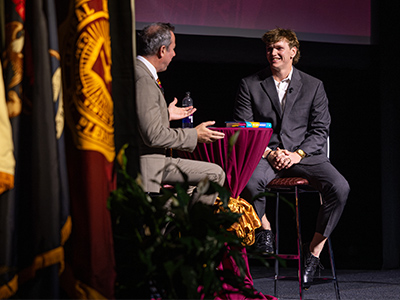
MacKinnon invited student-athlete and sport management major Declan Duley to join him on stage to talk about how CMU is supporting students and their success in the classroom and in life.
“A couple of times I questioned my choice, but I can say now absolutely this is the best choice I’ve made,” Duley said.
President MacKinnon said CMU needs to embrace innovation and change to address student enrollment. After showing a decline from 2010 to 2022, he pointed to encouraging signs in domestic enrollment, ahead of peer institutions, and a projected increase through 2030.
“During this time, our domestic enrollment has stabilized and has increased slightly, while our peer institutions have continued to experience declines. This is a remarkable turnaround,” he said. “Am I content with stabilization? No. And there are reasons for optimism.”
CMU’s Strategic Enrollment Management Plan, approved by the CMU Board of Trustees last year, is now more than 63% complete, with half of its strategies fully implemented. MacKinnon said that while it will take until 2030 to fully realize the impact of the plan on enrollment, CMU is already seeing positive changes.
“Seeing increases of any kind – especially among new and transfer students at the undergraduate level – means we are making important progress.”
Changes for CMU Online over the past year include a new website, an increased focus on flexible online degree programs, workforce training and a fully customizable bachelor’s degree. MacKinnon said these changes, along with employer and community college partnerships, are opening more pathways to a CMU degree.
The initiative known as Advancing Health Together is leading the effort to build the $100 million MyMichigan Health CMU Medical Education Building in Saginaw, which will serve as the future home of the Covenant HealthCare College of Medicine at CMU. It’s a change President MacKinnon said will bring all medical students together in one facility, address the shortage of physicians in Michigan and solidify CMU’s partnership with two leading health systems in the state.
MacKinnon said Artificial Intelligence is presenting risks and opportunities for CMU, and he has appointed a special advisor for AI who formed an AI advisory board to tackle tough issues surrounding the technology. The group considers the proper use of AI in the classroom, in research and the ethical use of AI.
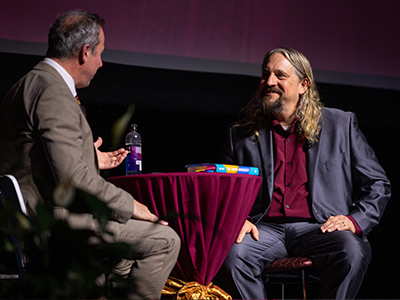
Ben Andera, special advisor for AI and executive director of academic and research computing, joined the president on stage for a discussion on efforts to responsibly incorporate artificial intelligence into education and research endeavors at CMU.
“I’m really excited about the opportunities AI will bring, while we also manage the risks and keep humans in the center,” Andera said.
Incorporating care into our DNA and becoming a national model of a caring university is a priority for President MacKinnon, who spoke about the ways CMU can use the theories laid out in Kevin McClure’s book The Caring University, and in the U.S. Surgeon General’s framework for workplace mental health and well-being.
“CMU should strive to do five things to promote healthy workplace mental health and well-being. Those five things are: protection from harm, connection and community, work-life harmony, mattering at work, and opportunity for growth,” MacKinnon said.
MacKinnon also explained the three pillars of CMU’s newly developed Employee Value Proposition, which defines what faculty and staff say are the reasons they work at the university. Those reasons are the caring community, meaningful work and unlimited potential.
“The foundation for all of this is the theme of ‘what you do here matters,’” he said. “Our goal is to make this part of our whole culture as we think about how to truly become a caring university.”
President MacKinnon concluded his remarks on the culture of care by introducing a new peer recognition program called CMU Shout-Outs. Anyone with a CMU email address can send a CMU Shout-Out to anyone at CMU. The sender completes an online form with a message of appreciation, encouragement or congratulations.
“This is something that might take 45 seconds of your time, but you can make the day of someone you work with here at CMU,” MacKinnon said.
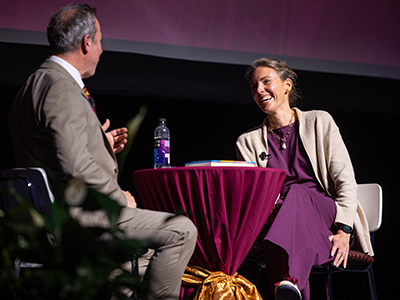
President MacKinnon then welcomed Rachael Nelson, professor of exercise science and chair of the Academic Senate, to discuss cultivating a culture of care at CMU.
“It’s really easy at universities to get siloed and focus on the things that are right in front of us,” she said. “It’s also important to feel cared for in relationship-building outside meetings. Providing more opportunities to get together is fantastic, and I don’t think it takes major initiatives or resources to do these things.”
A full recording of the event is available here: 2026 CMU State of the University Address.