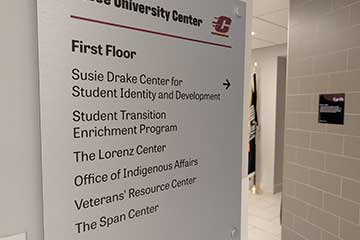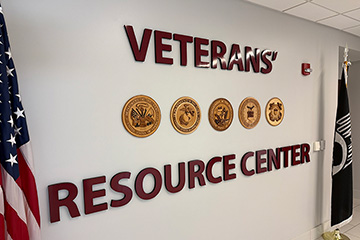
CMU named Gold-Level Veteran-Friendly School
October 15, 2026
Now through October 31, we're waiving application fees for all freshman and transfer applicants!
*Common app code: Central27
Honors student studies new perspectives abroad
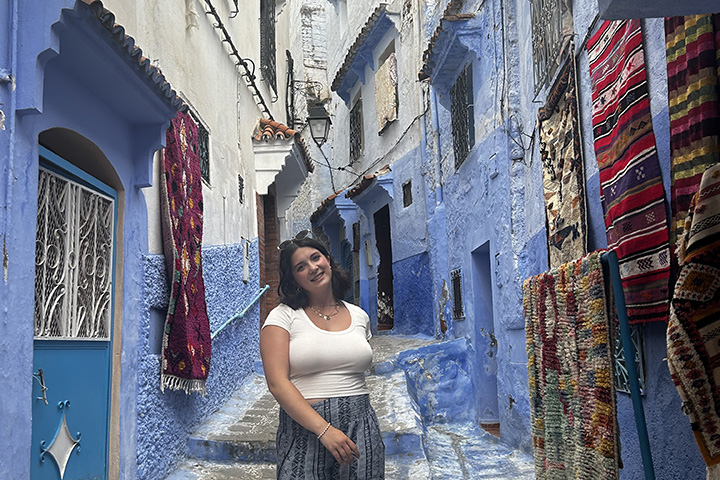
An immersive study abroad trip gave Isabelle Schrauben to an opportunity to practice her Spanish, learning about Moroccan culture from the residents of that North African country.
“I was able to converse with a woman in Spanish and talked to her about the migration crisis and disparities between Morocco and Spain,” Schrauben said. “It was really fascinating, and I would have loved to learn more.”
The Study Abroad experience provided a great learning opportunity, but it also challenged Schrauben to grow as a person.
“The culture shock is so real. Within the first few days of Morocco, it was really tricky,” said Schrauben, a Central Michigan University sophomore studying international relations and integrative public relations. “The culture is so drastically different from what you’re used to. No matter how adventurous or strong you think you are, that does come to get you.”
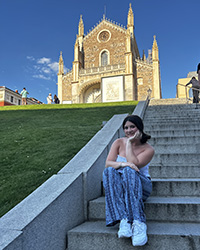
The experience will benefit Schrauben as she plans to work for the Peace Corps or work for a humanitarian NGO in the PR field. “I am fascinated with cultural context and the way different cultural identities merge within a nationality and a nation-state,” she said.
She traveled in the two countries from May 25-June 14 and extended the trip to spend an extra week in Spain with a family friend.
The trip was a course, Global Citizenship 309, that included 13 students and faculty member Nicole Barco. Students learned about Spain’s history and cultural identity before becoming more immersive in Morocco.
The class visited Cordoba, Toledo and Segovia in Spain. In Morocco, they visited Tetuán, Chefchaouen and Tangier. Schrauben also saw the Mediterranean Sea too. Schrauben stayed in a residencia in Spain and Riad D’ari in Tetuán. She met many new friends there as well.
“It was like an international dorm complex in Spain because there were students from around the world who spent time there anywhere from a few months to a year,” Schrauben said. “It was really cool to build those friendships, and I talked to another student from Boston because the language barrier wasn’t there.”
When staying at the residencia, each student had two meals per day. The class had a dining hall meal plan to eliminate groceries from their budget. While at the Riad, staff cooked meals. Schrauben liked the authentic Moroccan breakfast.
“It was kind of cool because we arrived in Spain and learned about their history and what brought them to their point where they were and their cultural identity,” Schrauben said. “They also specifically learned about the minority groups within that cultural identity, emphasizing the holistic citizenship and struggles those groups experienced.”
For the learning aspect, Schrauben was able to enjoy more immersive experiences rather than classroom experiences.
“Morocco was almost all immersive experiences and learning with group reflections. In Madrid, we would have class in the morning and immersive learning later in the day,” Schrauben said.
Schrauben and her fellow classmates stayed at a non-profit within the indigenous community that builds up the identity of women to be more self-sufficient and independent in Morocco. An individual named Martha led the class around Madrid and helped facilitate with Barco in classroom discussions. Guest speakers were also present during their educational experience.
While in Madrid, Schrauben and her classmates visited the ideological headquarters of the Romani community, and they showed them the struggles they face every day.
“We also got to see how that identity fits into broader stereotypical experience identity and we also did this with the Jewish center,” she said.
“Once Dr. Barco let us into different locations, whoever was in charge of the building would tell us about their space, what they do and what’s going on,” Schrauben said. “Then, Martha would give us a relevant history lesson, cultural context and reflect on it.”
Schrauben explored the stereotypical, global citizenship and identity of Madrid while also exploring the roots of certain situations or aspects that aren’t normally noticed. Her Spanish skills also came in handy as she was able to communicate with residents to learn more about the Moroccan identity.
“I was able to converse with a woman in Spanish and talked to her about the migration crisis and disparities between the two countries,” Schrauben said. “It was really fascinating, and I would have loved to learn more.”
The entire class became close friends, bonding with each other during their adventures in Spain and Morocco. They were also supportive of one another as they traveled on their own within a short amount of time.
Schrauben especially loved exploring Spain with her classmates. She walked around, tasted new food, and played euchre in Plaza Mayor. Schrauben kept a journal throughout her trip, containing doodles for each memory.
“I would like to doodle a sandwich when we get a really good sandwich or doodle cards,” she said. “So when I look back at it, the doodles show highlights of my trip were small memories that you don’t typically account for. The inside jokes, the laughs and the adventures you go on that you can’t necessarily put in itineraries.”
Schrauben’s Centralis scholarship through the Honors Program funded her trip.