Toastmasters build confidence through public speaking
October 23, 2026
Now through October 31, we're waiving application fees for all freshman and transfer applicants!
*Common app code: Central27
A semester-long MGT 360 collaboration helped Hannah Everitt turn cultural theory into lived experience and build global communication skills.
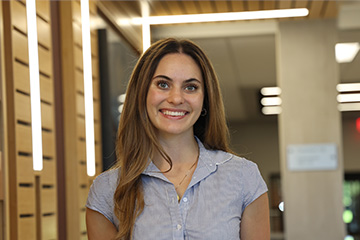
For senior general management student Hannah Everitt of Reese, Mich., what started as a class assignment in MGT 360: Managing Cultural Differences and Diversity in a Global Economy became one of the most meaningful experiences of her college career. The semester-long virtual exchange paired her with three students in Paraguay—Zamira, Bruno, and Thiago—and created the space for something deeper than she expected.
“It became clear from our first Monday evening meeting that these conversations would challenge me far more deeply,” Everitt said. “Each week, our discussions revealed new perspectives on communication, culture, values, and relationships while also helping me understand my own cultural identity more clearly.”
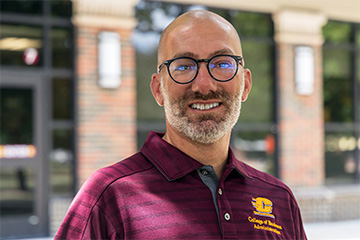
Unlike CMU’s structured 4-5 week COIL collaborations, this project unfolded over the entire semester, allowing students to practice cultural theory through real relationships. Faculty member Michael Pisani, who leads both types of global learning initiatives, said longer exchanges open different doors. “Students have a more open-ended opportunity to forge relationships and build trust over many weeks while learning about the business culture in another country,” he explained.
Everitt said she quickly realized the work wasn’t just about communicating—it was about communicating well.
“I slowed my speech, avoided slang, clarified unfamiliar words, and adjusted my phrasing to ensure I was being intentional, understood, and respectful,” she said. “These efforts strengthened my active listening skills and made our conversations more meaningful.”
As the meetings continued, she discovered how differently cultures balance tasks and relationships.
“Hearing the students describe how relationships often take precedence over tasks helped me reflect on how American culture is far more task-oriented and efficiency-driven,” she said. “Instead of treating our conversations as an assignment, my group intentionally incorporated small talk, humor, and personal stories. This made the meeting feel less transactional and more relational.”
Pisani noted that these insights mirror real differences in comparative business cultures, where expectations around time, hierarchy, collaboration, and relationship-building can vary widely. The exchange gave students an early look at how these cultural patterns shape workplace norms and management styles in different parts of the world.
She also found herself navigating ideas she had only encountered in theory. When the group compared American conflict sayings with Paraguayan ones—“forgive but never forget” versus “forget but never forgive”—she saw cultural differences come into focus. “This perspective surprised me and revealed how differently cultures interpret conflict, accountability, and emotional boundaries,” she said. “What Americans view as ‘normal’ is not universal.”
Some of the most joyful moments came from unexpected places: guessing games about Guaraní words; hearing about Paraguayan concerts and traditions; and watching her partners light up when discussing their cultural touchstones. “It was very clear that they were genuinely excited to share their culture,” she said. “Their enthusiasm brought the cultural content to life.”
For Pisani, those outcomes are exactly the point.
“The student takeaways are usually more profound than the COIL,” he said. “This project creates a space for students to apply cultural frameworks while building relationships rooted in trust and curiosity.”
By the end of the semester, Everitt’s understanding of global communication had shifted entirely.
“I realized that speaking the same language does not guarantee shared meaning,” she said. “These moments revealed how language is not simply vocabulary, but a mix of culture, identity, and social norms.”
Looking ahead to her management career, she says the experience will stay with her.
“This project became a transformative learning experience that reshaped how I understand communication, culture, and connection,” she said. “It reminded me that cultural awareness is not about memorizing facts, but about building authentic relationships, challenging assumptions, and viewing every cross-cultural exchange as an opportunity for mutual understanding and growth.”