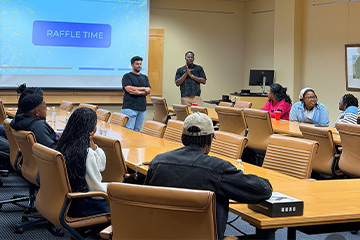
Toastmasters build confidence through public speaking
October 23, 2026
Now through October 31, we're waiving application fees for all freshman and transfer applicants!
*Common app code: Central27
President MacKinnon shares leadership insights aligned with how the College of Business prepares students for the future of work
On any given day, Central Michigan University President Neil MacKinnon might be celebrating graduating student-athletes, applauding a music performance, checking in with a student organization, or helping interview the next head coach.
“We all want to have a career or a position where you feel like what you do matters,” President MacKinnon said. “I certainly find this job fulfilling. Part of that is the variety, the opportunity to interact with faculty, staff, students, and alumni.
For MacKinnon, leadership is not just about decision-making at the top. It’s about people, communication, and preparing graduates to lead effectively in complex, real-world environments.
President MacKinnon’s path into higher education followed a traditional academic trajectory: graduate school, research, teaching, and a faculty role. Early in his career, he found himself teaching in the same classrooms where he once sat as a student, a full-circle experience that shaped his approach to leadership.
“Those first loves of higher education teaching and research I still do today,” he said. “Even as president, I’m fortunate to continue teaching and maintaining a research program.”
That continued connection to the classroom mirrors what CMU students experience every day: leaders who remain engaged in teaching, mentorship, and applied learning while preparing students for evolving careers.
Leadership roles followed naturally from department chair to dean, then provost, and eventually president.
“I can’t say that as a 28-year-old assistant professor I thought I’d be a university president,” he said. “But as you move into one leadership role, the next one doesn’t seem so scary.”
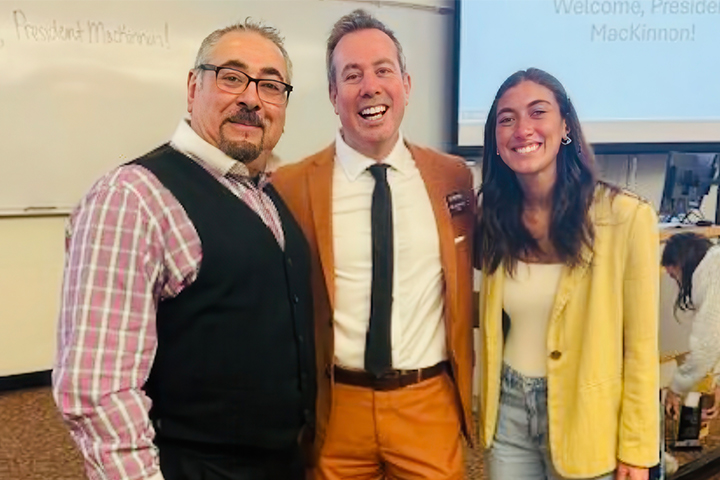
Mentorship, President MacKinnon said, has been essential at every stage of his career.
“At every phase in your career, you need different kinds of mentors,” he said. “People you can bounce ideas off of, who will be real with you and who you can confide in.”
Two of those mentors, former University of Michigan President Santa Ono and former University of Tennessee Chancellor Beverly Davenport, attended his investiture at CMU last spring.
“No matter your position, we all need mentors,” he said.
For business students preparing to enter competitive industries, that message reinforces the value of seeking feedback, building relationships, and learning from experienced professionals early and often.
When asked what makes an effective leader, President MacKinnon pointed to a framework that has shaped his own leadership philosophy: The Ideal Team Player by Patrick Lencioni.
“Humble. Hungry. Smart,” he said. “Humble means self-aware. Hungry means passion. Smart is the ability to relate well to others.”
Those qualities, he explained, are less about title or authority and more about how leaders communicate, collaborate, and show up for others.
“If others are going to follow those standards, I need to be role modeling them,” he said.
While technical expertise remains important, MacKinnon believes students often underestimate the power of communication skills, particularly public speaking, in bringing those leadership qualities to life.
“If you’re going to articulate a vision or get people excited, you need to be able to speak publicly,” he said. “In the age of social media, it’s almost become a lost art.”
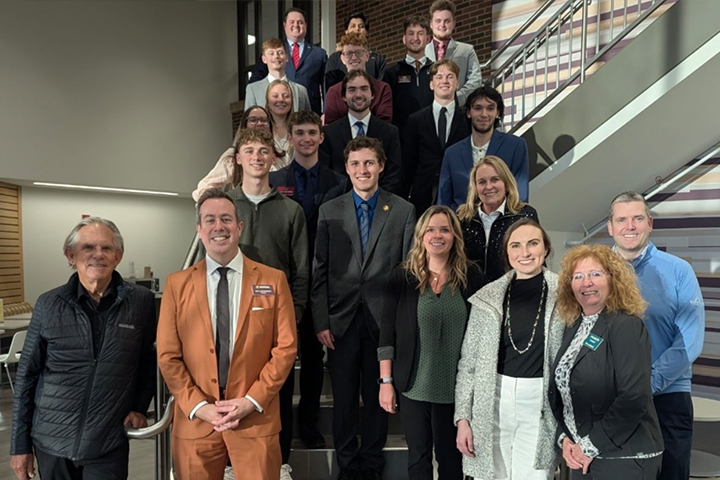
That’s why he was encouraged to see College of Business students launch a Toastmasters registered student organization this year — an example of students taking ownership of their professional development and building the confidence needed to lead effectively in real-world settings.
President MacKinnon’s advice to students preparing for leadership roles begins with purpose.
“Find something you’re passionate about,” he said. “You spend a lot of your life in your career. You don’t want to be in a role where you don’t feel fulfilled or feel like what you’re doing matters.”
He also encouraged students to think critically about workplace culture and values.
“Titles, salaries, and locations matter,” he said. “But if your values don’t align with the workplace, it’s hard to feel fulfilled.”
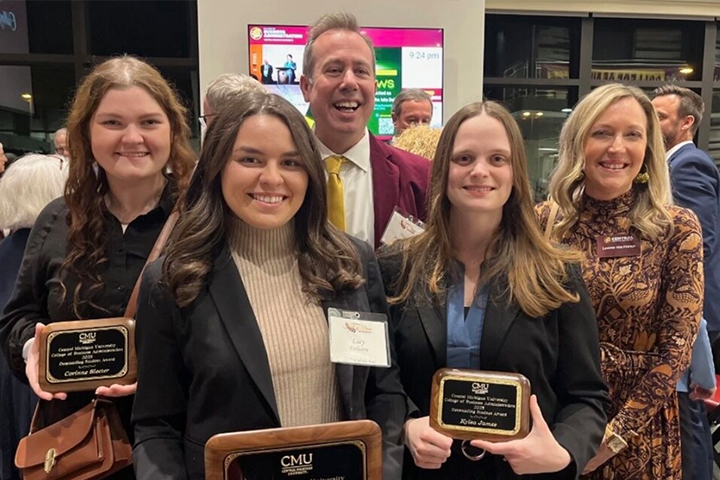
As industries adapt to artificial intelligence and digital transformation, President MacKinnon said flexibility and lifelong learning will define future success skills that will increasingly shape how students prepare for their careers.
“We know the workplace in 2035 will look very different from what it does today,” he said. “The key is having the skills and mindset to be adaptable, flexible, and committed to lifelong learning.”
“Even if we don’t know exactly how things will change, we know they will,” he said. And he hopes to lead a university that prepares students to meet those changes head on.