Connecting culture, psychology and career path
November 5, 2026
Central Michigan University students interested in Applied Forensic Studies can choose from a new, one-of-a-kind minor that lets students choose how to specialize their forensic foundation.
Whether they want to examine evidence in a crime lab, investigate instances of wrongdoing using advanced digital forensic techniques, study human remains to reconstruct and understand events surrounding crimes, investigate crimes and the behavior, motives, memory, and decision-making involved, or dive deep to investigate additional evidence and solve previously unsolved crimes, the Applied Forensic Studies minor pairs students’ passion with relevant, real-world experience to catapult their careers after CMU.
The new minor opened to students during the Fall 2026 semester, expanding upon the Applied Forensic Studies certificate that CMU has offered since 2023. The minor can be completed with 22-28 credit hours. The certificate requires 10-12 credit hours.
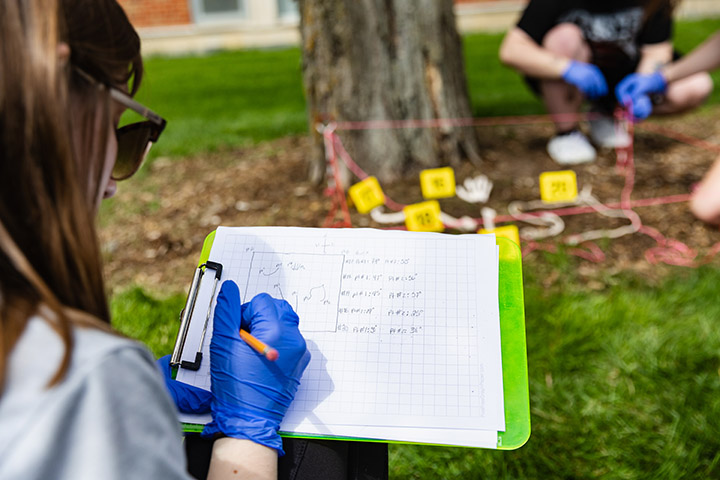
CMU faculty developed the Applied Forensic Studies minor in consultation with input from experts outside of CMU, including current and former members of the Michigan State Police Forensic Division and members of the Michigan Bureau of Preparedness. It provides a cross-disciplinary foundation in modern forensic work connecting methods from psychology, anthropology, biology, chemistry, computing and journalism to real questions faced by investigators, labs and courts.
Students will complete required courses in communication, psychology and anthropology alongside of required courses in their selected track and complete an internship or research project to practice what they’ve learned with guidance from professionals.
Students can customize their academic pathway with electives in one of four tracks: Forensic Psychology and Anthropology; Biotechnology; Cybersecurity; or Investigative and Forensic Journalism.
“The applied forensic studies minor and certificate are for people who are curious and are excited about asking questions about forensic disciplines and investigations,” says Kyle C. Scherr, professor and chair of the Department of Psychology.
He encourages any students interested in learning more about the new minor or the certificate to contact the Department of Psychology or the Department of Philosophy, Anthropology and Religion.
Recent graduate Nathan Welch, ’26, who is now doing investigative work for the FDIC, says studying forensics reshapes how you approach problems and find solutions in a world that never stops changing.
“It blends science and engineering with human behavior all into one toolkit that transfers into any career or leadership role."