Now through October 31, we're waiving application fees for all freshman and transfer applicants!
*Common app code: Central27
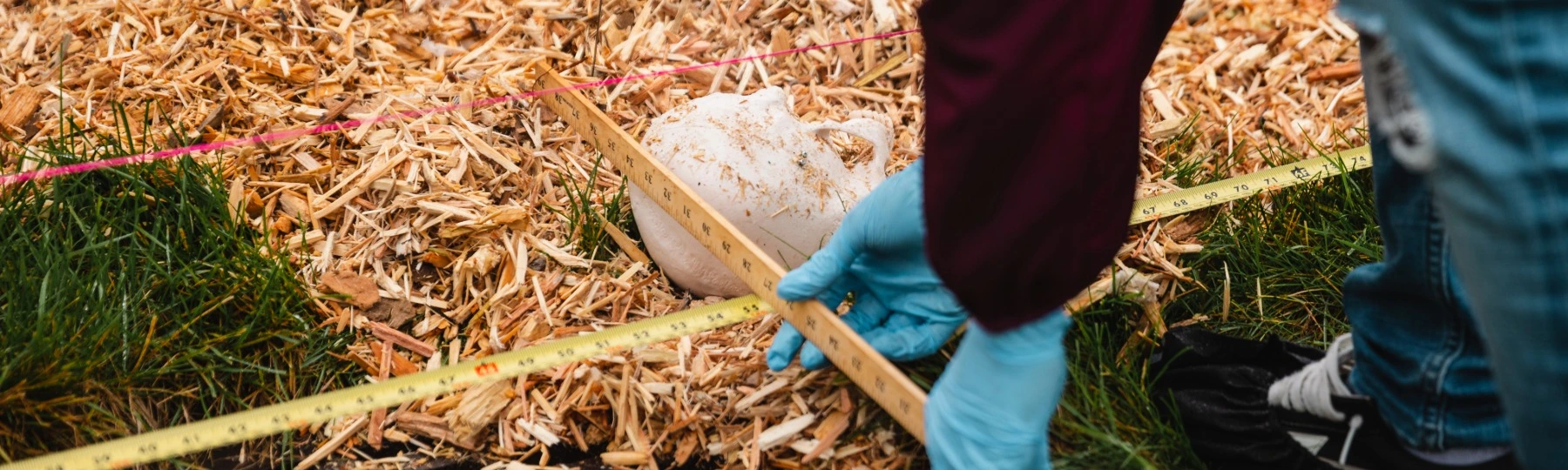
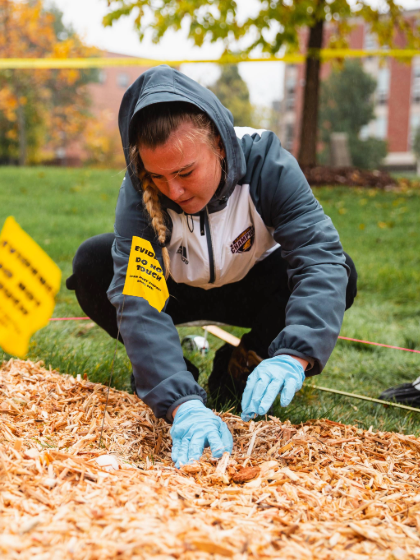
Applied Forensic Studies
Minor
Forensics minor overview
Developed in consultation with Michigan State Police, the applied forensic studies minor gives you a cross-disciplinary foundation in modern forensic work and shows you how to pair those tools with your major. You'll connect methods from psychology, anthropology, biology, chemistry, computing and journalism to real questions faced by investigators, labs and courts.
To start, you'll complete three required courses in communication, psychology and anthropology. You'll learn how to present data clearly and persuasively, understand basic psychology research used in law and get a thorough overview of forensic science. Next, you'll have a 1-3 credit internship or research project where you practice what you've learned with guidance from professionals. Then, you'll customize your path with electives in one of four focused tracks.
Forensic Psychology and Anthropology track
Build a toolkit used in forensic labs by evaluating and studying behavior, memory, interviewing, human variation and skeletal analysis. You’ll also examine how social factors and bias can influence methods and interpretations so you can spot weak evidence and communicate stronger conclusions. This track is open to all majors and pairs well with biology, psychology and anthropology plans.
Biotechnology track
Strengthen your laboratory skills for evidence testing, including DNA profiling and latent print analysis basics. You’ll work with techniques and instruments that support casework and research. This track is available to majors in Biology (Biomedical; Cell and Molecular), Biotechnology (Microscopy; Molecular Biology), Biochemistry and Neuroscience (Cellular and Molecular Neuroscience) and aligns with students preparing for graduate study or lab-based roles.
Cybersecurity track
Focus on electronic and digital evidence. You’ll practice workflows for device imaging, data recovery, log analysis and chain-of-custody documentation that help investigators determine what happened and when. This track is available to majors in Computer Science and Cybersecurity and fits students interested in incident response and digital investigation.
Investigative and Forensic Journalism track
Learn how to investigate, verify and explain findings tied to forensic outcomes. You’ll practice open-source research, public records requests, interview techniques and story development so you can translate technical results for the public and hold processes to account. This track is open to all majors and complements journalism, media and social science studies.
Program Snapshot
Program Type: Full-Time
Location: On Campus
Program Length: 3-4 semesters
Credit Hours: 22 - 28
What you'll learn in forensic studies
When you add this forensics minor, you build practical skills that stand out on applications and in interviews. You’ll train on methods used in labs, during field investigations and in post-case reviews where procedures are tested and improved. Along the way, you’ll sharpen critical thinking, write and present data clearly and apply techniques from social science, bench science, computing and journalism to real problems that matter in academic and professional settings.
Your internship or research project puts you in a professional setting where you handle tasks that matter—such as processing mock evidence, preparing reports, analyzing datasets or assisting with digital examinations—while getting feedback that boosts your confidence and accuracy. Faculty mentors and site supervisors help you connect coursework to practice and document your results for future applications.
By graduation, you’ll understand how evidence is collected, analyzed, interpreted and communicated. You’ll also know how to question procedures respectfully, document your reasoning and collaborate with specialists from other fields. These are the same habits employers look for in labs, agencies, newsrooms, nonprofits and tech teams that support investigations and related projects.
What you’ll do:
- Practice documentation, chain-of-custody and quality control that protect evidence and your findings.
- Use statistics and research design to test claims and present results that others can repeat and verify.
- Apply ethical standards when working with sensitive information, human subjects or public records.
- Collaborate across disciplines so you can connect biological, psychological, digital and social clues into a clear narrative.
- Build a portfolio from your internship or research that shows your methods, results and reflection on what you’d improve next time.
Highlights of the forensics minor
- Apply your skills before you graduate: Hands-on learning in professional settings through internships and research.
- Customize your course load: Choose from forensic anthropology, forensic cybersecurity, forensic biotechnology and forensic journalism.
- Planned by the pros: This minor was developed in consultation with Michigan State Police forensic labs.
Forensic studies can boost your career
Whether you plan to study biology, psychology, computing, journalism or a related field, this forensic science minor helps you connect classroom knowledge to casework. You’ll get comfortable with real tools, real standards and real accountability—skills you can carry into advanced study or entry-level roles that support investigations, lab operations, digital analysis or evidence communication.
The minor adds applied experience to your transcript and portfolio, signals readiness to collaborate across fields and strengthens applications for internships, research assistantships and early career positions.
| Career | Projected Salary |
|---|---|
| Forensic Science Technician | $67,440 |
| Information Security Analyst | $124,910 |
| News Analyst, Reporter, and Journalist | $60,280 |
Request Information about CMU
Loading...
By submitting this form, I agree to receive calls, emails and/or text messages from Central Michigan University to discuss furthering my education.