Director of the Clarke Historical Library announces retirement
October 9, 2026
Now through October 31, we're waiving application fees for all freshman and transfer applicants!
*Common app code: Central27
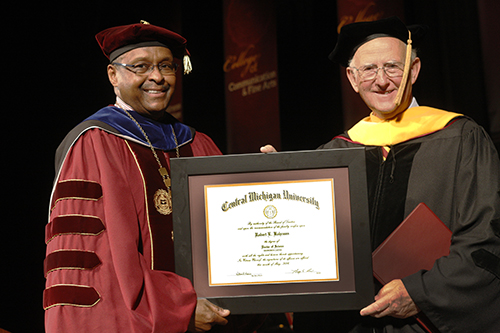
The College of Science and Engineering at Central Michigan University mourns the passing of Robert “Bob” Kohrman, founding dean of the College of Science and Technology and a longtime faculty member whose impact on generations of students, faculty, and staff continues to shape the university today. Kohrman passed away Sunday, April 5, leaving behind a legacy built over nearly four decades of service, scholarship, and leadership. Kohrman joined CMU in 1968, after earning his doctorate in organic chemistry from the Massachusetts Institute of Technology. Though opportunities in industry offered higher salaries, he chose higher education and chose Michigan, drawn by the opportunity to teach in his home state and to contribute to a university experiencing rapid growth and transformation.
Over a 39-year career, Kohrman served in numerous roles across campus, including professor of chemistry, department chair, associate dean, interim provost, and ultimately dean. In 1997, during a university reorganization, he was named dean of the newly formed College of Science and Technology, now known as the College of Science and Engineering, becoming the college’s founding dean.
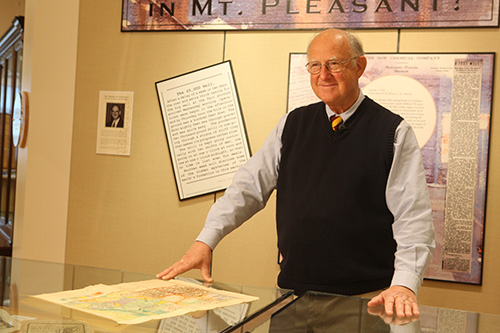
“As the founding Dean of the College of Science and Technology (now the College of Science & Engineering), Dean Kohrman’s leadership created new opportunities for our students, created an environment to attract top-notch faculty, and expanded our research enterprise,” said Interim Dean Dr. Tracy Galarowicz. “Bob led with curiosity and generosity, inspiring faculty and staff to explore new directions. Bob’s influence will be forever felt within the college and at CMU.”
Kohrman’s academic career was marked by both scholarly achievement and a commitment to hands-on learning. In the 1970s, he became increasingly involved in research and received CMU’s first university patent. He earned promotion to full professor and received university honors including CMU’s Centennial Award and a teaching award.
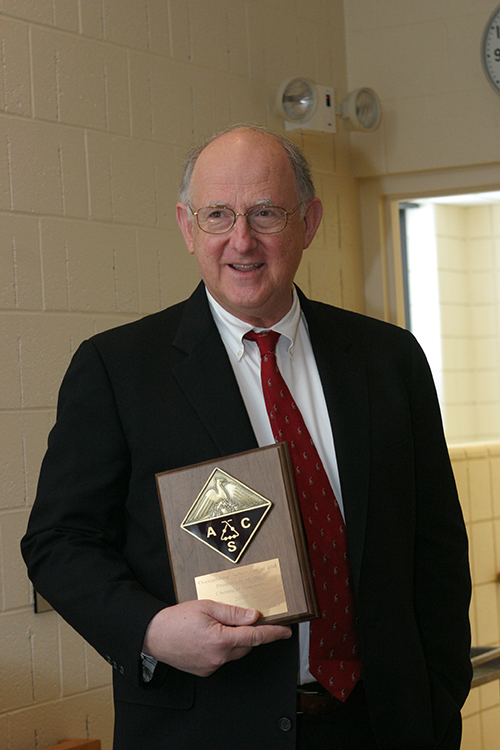
Yet colleagues say titles and awards never defined him.
Former Associate Dean Rich St. Andre, in a message shared by CMU staff member Lori Kreiner, remembered him simply: “Bob was a good, good man. We all owe a lot to him.”
Kreiner echoed that sentiment, reflecting on Kohrman’s deep humanity and the many ways he taught beyond the classroom.
“Bob was a good man. He was an educator, a person who not only taught students, but one who shared his stories about his students, family, vacations, and experiences. He educated without even knowing he was educating,” she said. “He loved his family and loved CMU. He dedicated his life to both.”
Those who worked with Kohrman often described him as a rare combination of brilliance and humility. Former colleagues frequently referred to him as a “renaissance man,” a title earned not only through his scientific accomplishments but through his broad intellectual curiosity and wide-ranging passions.
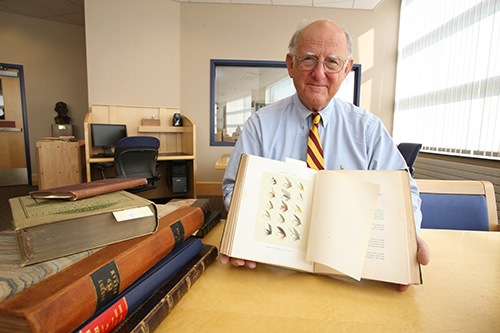
His office once reflected that spirit: scholarly journals alongside photographs of streams, fish, and quiet landscapes—a nod to his lifelong love of angling and the outdoors. Beyond chemistry, Kohrman had deep interests in history, book collecting, and conservation. He cataloged angling literature at the Clarke Historical Library and contributed historical scholarship for museum exhibits focused on rare angling collections.
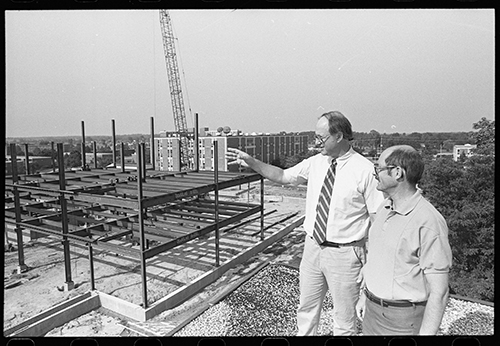
He also found joy in working outdoors with colleagues at Neithercut Woodland, Veits Woods, and the Biological Station on Beaver Island, helping to maintain trails and maps for others to enjoy. With regard the Biological Station on Beaver Island, he worked closely with former Professor Jim Gillingham who oversaw the operations of the station. Professor Gillingham recently recalled, “I never met a professional chemist who possessed a depth of knowledge in history and biology like Bob Kohrman. He was amazingly conversant in a wide variety of topics ranging from antique apple trees to bygone Coast Guard boathouses. Bob’s personal interest in and professional support for CMU’s Biological Station on Beaver Island was instrumental in bringing a host of significant improvements to fruition. Among these are Miller’s Marsh, the Academic Center, Egbert Farm and the Boathouse.”
Kreiner recalled how his enthusiasm extended to even the smallest moments.
“He shared with me his knowledge of bluebirds,” she said. “The pure joy that I received watching him light up when the birds would fly to the house and the feeder, as if he was seeing them for the first time.”
Kohrman remained deeply connected to campus life beyond academics. He loved homecomings, chili cookoffs, gatherings, golf, fishing, holidays, pumpkin carving, any opportunity to bring people together.
In describing Bob's love of life and fishing, John Grossa, former CMU professor, close friend, and fishing companion of nearly fifty years, recalled, " For nearly five decades Bob lead fellow fishers on trips to the picturesque northeastern shore of Lake Superior. In early years fishing for Steelhead Trout was our singular focus. As the years passed and interests evolved Bob collected a trove of books, journals and historical records of Lake Superior lore. Bob learned of 19th and 20th century fishers and other tourists as well as indigenous people and early settlers and shared his knowledge with presentations to local communities. Building relationships with managers and biologists at Lake Superior Provincial Park, Bob would report observations of Bald Eagles and Peregrine Falcons that returned to nest again after a long hiatus. Quite different from the typical tourist, Bob learned about this region, its people and history and shared much with its citizens."
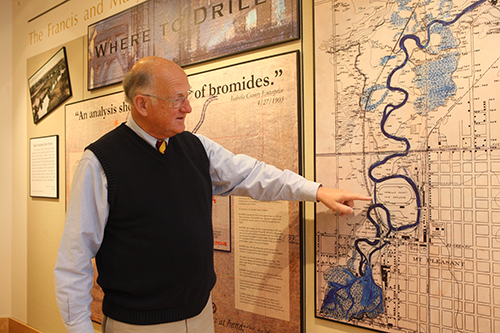
Professor Grossa’s remarks capture Bob’s deep love of fishing and history, as well as his passion for sharing knowledge, educating others, and enriching the experiences of those around him.
It would be remiss not to recognize his deep and abiding love for his English Springer Spaniels during his time at CMU—Chip, Sadie, Tag, Pepper, Tipper, and Abby. They were far more than companions; they were part of his everyday life and joy, faithfully by his side through it all. Whether accompanying him during late-night research in Brooks Hall, joining him on quiet walks in search of bluebirds, or traveling with him to cherished places like Neithercut, Beaver Island, and Lake Superior, they shared in the rhythm and richness of his life. In return, they gave him unwavering loyalty, comfort, and simple, heartfelt joy—perhaps most enthusiastically expressed around dinnertime!
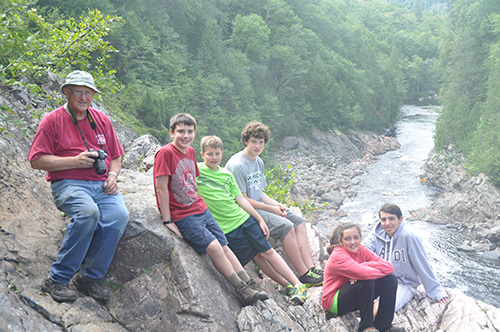 Besides all of these activities, the things that Bob cherished the most was time with his family and especially every moment he had with his five grandchildren. His love for them was unbounding and he tried to provide new adventures and learning opportunities for all of them as they grew into adults. Andrew Kohrman, one of the five grandkids (who has a chemistry degree from UM like his grandfather), remembered his “Grandad” by describing him as one “of his biggest role models. The way he lived and experiences he provided helped shape me to what I am today. I will never forget all the adventures he took us on, from Alaska to London and especially to the north shores of Lake Superior. All of those times formed precious memories for me. His endless support of education and learning has been inspiring and is a legacy I hope to continue in my field. His guidance and support is an incredible example of what it means to live a meaningful life.”
Kohrman himself often said engaged learning, whether through laboratory work, field studies, or internships, was essential to student success.
“We believe that students learn better by being engaged in the subject matter,” he said during his retirement in 2007.
One of Bob’s former CMU students and now Corporate Vice President of Charles River Laboratories, Scott Fountain (BS 89), after hearing about Bob’s passing, added,
“Professor Kohrman (Bob) recognized a student’s sudden interest in the instrumentation module of organic chemistry and literally offered me the key to the sequestered GC/MS room in the Chemistry Building, giving me my first job as a chemist. That experience inspired a post-graduate education at The University of Michigan and a lifelong vocation. He was an exceptional teacher and mentor.”
“There are many, many more Bob stories,” Kreiner said. “He knew how to live, laugh and love, and I am honored to be a part of his story.”
For the College of Science and Engineering, his story remains inseparable from its own. His leadership helped define its foundation, but his kindness, curiosity, and generosity are the qualities that colleagues say endure most.
There will be a service for Bob Kohrman at the First Presbyterian Church of Mt. Pleasant on April 25, 2026, with a visitation at 10:30, followed by a service at 11:30 and followed by a lunch at 12:30. In lieu of flowers and gifts, Bob had requested donations be made to the Friends of Beaver Islands Biological Station of CMU or The Robert E. and Cordelia B Kohrman Angling Endowment at the Clarke Historical Library.