Now through October 31, we're waiving application fees for all freshman and transfer applicants!
*Common app code: Central27
Highlight of time at CMU helps student shape future
Computer science major looks forward after summer on Beaver Island
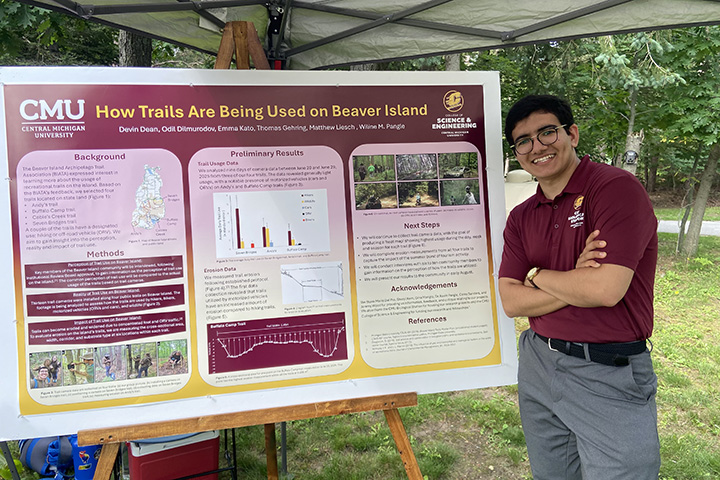
As Odil Dilmurodov prepares to use his last year at Central Michigan University to shape his life after graduation, one experience stands out in conceiving of his future: the summer he spent on Beaver Island.
“I think it’s the highlight of my student life at CMU,” he said. It wasn’t just what he learned on the island; it was the relationships he formed while helping the island’s permanent residents.
Dilmurodov was part of a three-student team that helped residents of that remote northern Michigan island understand the impact of off-road vehicles on four of the island’s hiking trails. The project was the result of staff at the CMU Biological Station asking island residents how they could work together, Dilmurodov said.
Each member of the team brought their own expertise to the project. One team member, a biologist, analyzed the trail to determine whether they were damaged by use-related erosion. Another interviewed residents and researched what regulations applied.
As a computer science major, Dilmurodov tackled data collection and analysis. He also drew on his experience working with people across disciplines while pursuing an InSciTE certificate.
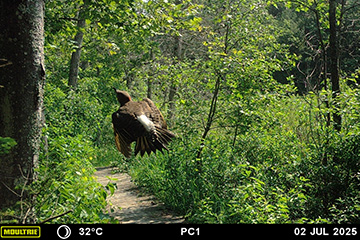
Dilmurodov started the project by setting up cameras along the trails to capture images of who, or what, was using them.
He saw deer. He saw coyotes. He saw a woodpecker. He saw CMU President Neil MacKinnon. Alumni who stayed on the island saw the CMU cameras and shared stories about their time on campus.
He also collected data about who was using the trails and how.
Island residents were concerned that off-road vehicles used by visitors were degrading the trails. Dilmurodov built and analyzed the data set and collaborated with the other two team members, which helped residents arrive at factually grounded factually grounded conclusions.
The research took most of the summer, and at the end of it, the team presented their individual findings to island residents.
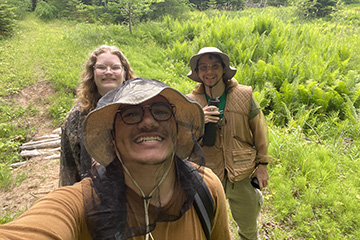
It wasn’t just the culmination of the project. It helped cement a relationship that started when the team arrived and prepared the trails by clearing debris created by a winter storm.
He said he also realized that his computer science major has broader application than he realized.
“My skills can be used for more than code,” he said. He hopes to pair the skills he’s learned through the computer science program with his own passion for the environment and maybe go into computational ecology.
Related News


CMU hosting MI-ACE Women of Color Collaborative Annual Luncheon
October 22, 2026
The week in photos: October 12-18
October 20, 2026