Now through October 31, we're waiving application fees for all freshman and transfer applicants!
*Common app code: Central27
10 Within 10 Recognition
Shaniquè Broom, Ph.D. '13, '15, '17
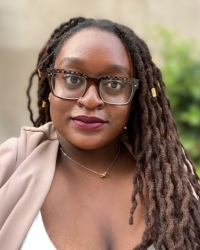
2025 10 Within 10: Shaniqué Broom, Ph.D.
2013, 2015, 2017, College of the Liberal Arts and Social Sciences
Bachelor of Science, Psychology; Master of Arts, Higher Education Administration; graduate certificate, college teaching
As the racial equity manager for Boulder County Human Services in Colorado, Shan uses strategy, advocacy and lived experience to build systems where inclusion and healing can thrive. She’s also the founder of a coaching and consulting practice focused on systems healing and leadership development for Black women navigating workplace trauma and transformation.
Shan began her journey at CMU as a psychology major, going on to earn her master’s in higher education administration and pursue further graduate work. She made history as the first Black woman to serve as hall director in Merrill Hall, and her leadership has continued to grow, rooted in purpose, accountability and care.
She credits the people who believed in her — and the ones who didn’t — for sharpening her voice and vision. “Being a CMU Chippewa isn’t just about maroon and gold,” she says. “It’s about who you become when you’re tested, stretched and still rise with style. It also means choosing how and when to share your story — especially when that story was shaped by tension, not ease.”
In addition to her bachelor's in psychology, master's in higher education/higher education administration and a graduate certificate in college teaching from CMU, Shan holds a Ph.D. in higher education/higher education administration from the University of Denver.
We asked our 10 Within 10 honorees to reflect on their time at Central, share some wisdom with current students, and talk about what it means to them to be a CMU Chippewa.
What has been your coolest moment since graduation? Creating a business that centers healing and strategy for Black women felt like coming home to myself. I didn’t set out to be an entrepreneur, but I followed what felt honest and it grew into a space that helps others reclaim theirs, too. The coolest part isn’t the title or milestones. It’s knowing that my work is both a mirror and a map for people like me.
What is your fondest memory of CMU? Late-night walks from the UC to Troutman! Those unfiltered, soul-deep conversations with my fellow scholars shaped who I was becoming. And marching band: the chants, the crisp fall air as we marched toward the stadium, and that electric moment inside it, instruments/flags up, hearts full. The rhythm of belonging, the unity of purpose, those memories still resonate.
Do you have any advice for students coming to CMU? Make room for both ambition and rest. Don’t chase resumes but build identity. Your future isn’t just about what you’ll do. It’s about who you’ll be when no one’s watching. Use this time to try, fail, speak up and stay soft.
What advice would you give to new graduates? You don’t have to contort yourself to be successful. Success that costs you your health or identity isn’t success, it’s survival. Take your time. Set boundaries early. Choose alignment over approval. You’re allowed to build a life that works for you.
What has your work life taught you? Being “excellent” isn’t enough in systems designed to exploit you. Strategy, softness and self-trust matter more. I’ve learned to ask better questions, advocate with clarity, and prioritize spaces where I don’t have to overperform to be respected. And navigating exclusion isn’t the same as being unqualified. I learned to advocate, rest and still take up space even when others tried to make me small.
Why should CMU Chippewas dedicate their time and give back to the university? Because CMU can only grow if we stay engaged, especially those of us who were harmed here. Giving back doesn’t mean forgetting. It means helping build a campus where students don’t have to recover from their education to succeed. I stay connected to ensure others don’t face what I did, and to be the voice I needed back then.
What has being involved with CMU after graduation meant to you? I earned my master’s in 2015 and became the first Black woman Hall Director in Merrill — South Campus. Staying connected means offering the kind of support I didn’t always get. I lead with lived experience, cultural humility and strategic insight, because representation without relationship is hollow. I stay involved to build bridges that last, especially for students navigating systems not built with them in mind.
What connections have you made through CMU? Some of the most impactful connections came through resistance. I met people at CMU who fought for me when I didn’t yet know how to fight for myself. Black women who used their voices so I could find mine. Those relationships reminded me I wasn’t the problem. I was the pattern breaker.
What people or experiences at CMU helped you succeed? The people who believed in me and the ones who didn’t. I was told, flat out, that I wouldn’t succeed because “the program wasn’t built for people like me.” That moment shattered me. But I found advocates who helped me speak up, push back and see myself beyond their limits. That tension between harm and hope was where I grew my voice. In 2008, I discovered CMU, then myself.
What does being a CMU Chippewa mean to you? It means surviving snowstorms, squirrels and racial microaggressions and still showing up to class and rehearsal. It means legacy, grit and creating joy in spaces that weren’t built for you. Being a Chippewa isn’t just about maroon and gold, it’s about who you become when you’re tested, stretched and still rise with style. It means I can say, with full chest, “Look at me now” — and mean it.