Now through October 31, we're waiving application fees for all freshman and transfer applicants!
*Common app code: Central27
CMU researchers receive NIH grant to investigate how methylmercury affects the brain
A Central Michigan University research team is taking a closer look at how exposure to methylmercury, a widespread environmental pollutant, can disrupt the brain’s neural circuits and potentially contribute to neurological disease.
Michael Sceniak, a neuroscientist working with Shasta Sabo, a faculty member in CMU’s Department of Biology, recently received a National Institutes of Health (NIH) grant to investigate the effects of chronic methylmercury exposure on the brain.
The project focuses on the neocortex, particularly the frontal cortical circuits involved in functions such as emotion and cognition. They’ll examine how methylmercury affects the brain at multiple levels, from individual neurons and synapses to larger neural networks.
“Mercury is a global pollutant that poses widespread potential for neurotoxic exposure,” Sceniak said.
Methylmercury, or MeHg, is a form of mercury that is prevalent in aquatic environments. People can be exposed to it primarily through contaminated food and water, including fish. The World Health Organization lists mercury among the 10 chemicals of major public health concern.
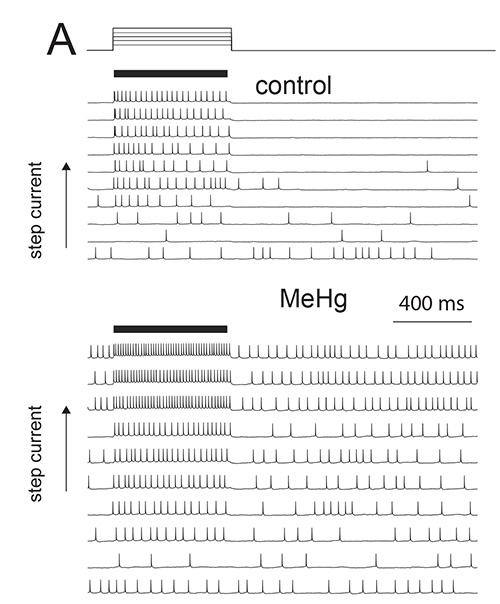
The new research builds on previous work by Sceniak and Sabo examining the effects of methylmercury on neurons. In a 2024 study published in the Journal of Neurophysiology, researchers found that methylmercury exposure can cause hyperexcitability in neurons in the medial prefrontal cortex. Their findings provided evidence of a potential mechanism through which environmental neurotoxicants could contribute to neurological disease.
This new NIH-funded project will expand on that work by examining the effects of longer-term methylmercury exposure in living animal models.
The researchers are particularly interested in understanding how chronic exposure changes synaptic function and neuronal networks in the frontal cortex.
“The question is the synaptic and neuronal network effects of chronic methylmercury exposure,” Sceniak said.
Understanding environmental influences on the brain
Mercury toxicity has been studied for decades, but Sceniak said he was surprised by how much remains unknown.
“There is a gap in knowledge about MeHg on neocortical function, given that it has been a known toxicant for so long,” he said.
That gap could be important as researchers work to better understand neurological disorders.
Sceniak said environmental exposures such as methylmercury may represent one piece of a much larger puzzle when it comes to neurological disease, mood disorders, and cognitive decline.
“Hopefully more emphasis will be placed on understanding environmental contributors of neurological diseases,” he said. “Much attention has been directed at single genetic mutations as a source of neurological diseases such as frontotemporal dementia without regard to life history and environmental impacts. Gene environment interactions have been largely left unstudied.”
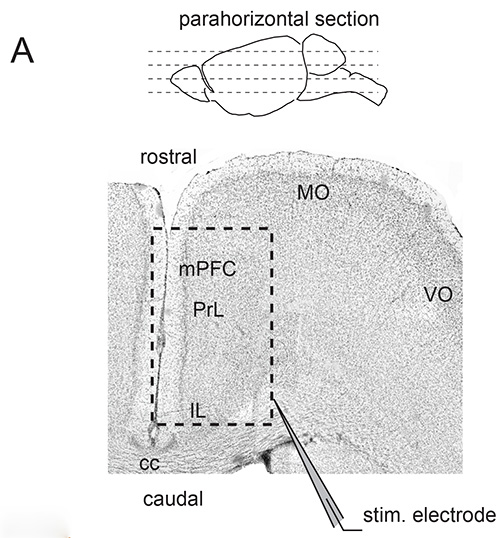
The researchers are not suggesting that methylmercury is the sole cause of conditions such as dementia. Rather, the project is designed to establish a better understanding of how an environmental neurotoxicant can affect the brain’s circuitry and whether those changes could contribute to neurological dysfunction.
For Sceniak, the work represents a continuation of a career focused on understanding how the brain works at the level of individual neurons and neural circuits.
He earned his Ph.D. in neural science from New York University in 2000, with an emphasis on in vivo neurophysiology. His early research involved recording neural activity in the visual cortex of monkeys. Since 2004, he has used whole-cell patch-clamp techniques to study neurons in brain slices.
Those skills are directly applicable to the current project, which combines physiological approaches with studies of synapses and molecular mechanisms.
Sabo's research at CMU focuses on neuroscience and the molecular and cellular mechanisms underlying neural circuit development and dysfunction.
From previous findings to a broader question
Ultimately, the researchers hope their work will contribute new knowledge about how environmental neurotoxicants affect the brain.
For Sceniak, that means looking beyond what happens when individual neurons are damaged and understanding how changes at the cellular level can alter the function of entire neural circuits.
As neurological diseases and cognitive disorders become increasingly important areas of research, understanding the environmental factors that may influence brain health could provide another avenue for scientists seeking to understand why neurological dysfunction develops.
The researchers' goal is to add to that body of knowledge by defining what chronic methylmercury exposure does to the brain, and, ultimately, how environmental exposures may influence neurological health.
Related News


CMU summer trips teach the value of reflection
October 5, 2026



CMU mathematics Ph.D. student dives into new area of research
September 14, 2026