Workshops & Events
Connect with mentors and faculty who know what it takes to succeed.
Explore events
At Central Michigan University, the Isabella Bank Institute for Entrepreneurship is more than a program—it’s where students from every major turn ideas into real impact. As Michigan’s first Department of Entrepreneurship, we’re a hub for hands-on learning, innovation, and mentorship.
Here, you’ll:
Whether you want to start something new or transform what already exists, the Institute is your launchpad.
When you’re ready to get started, stop by Grawn 164 to join the team or visit the Idea Den in Grawn 166—your space to brainstorm, build, and take the next step.

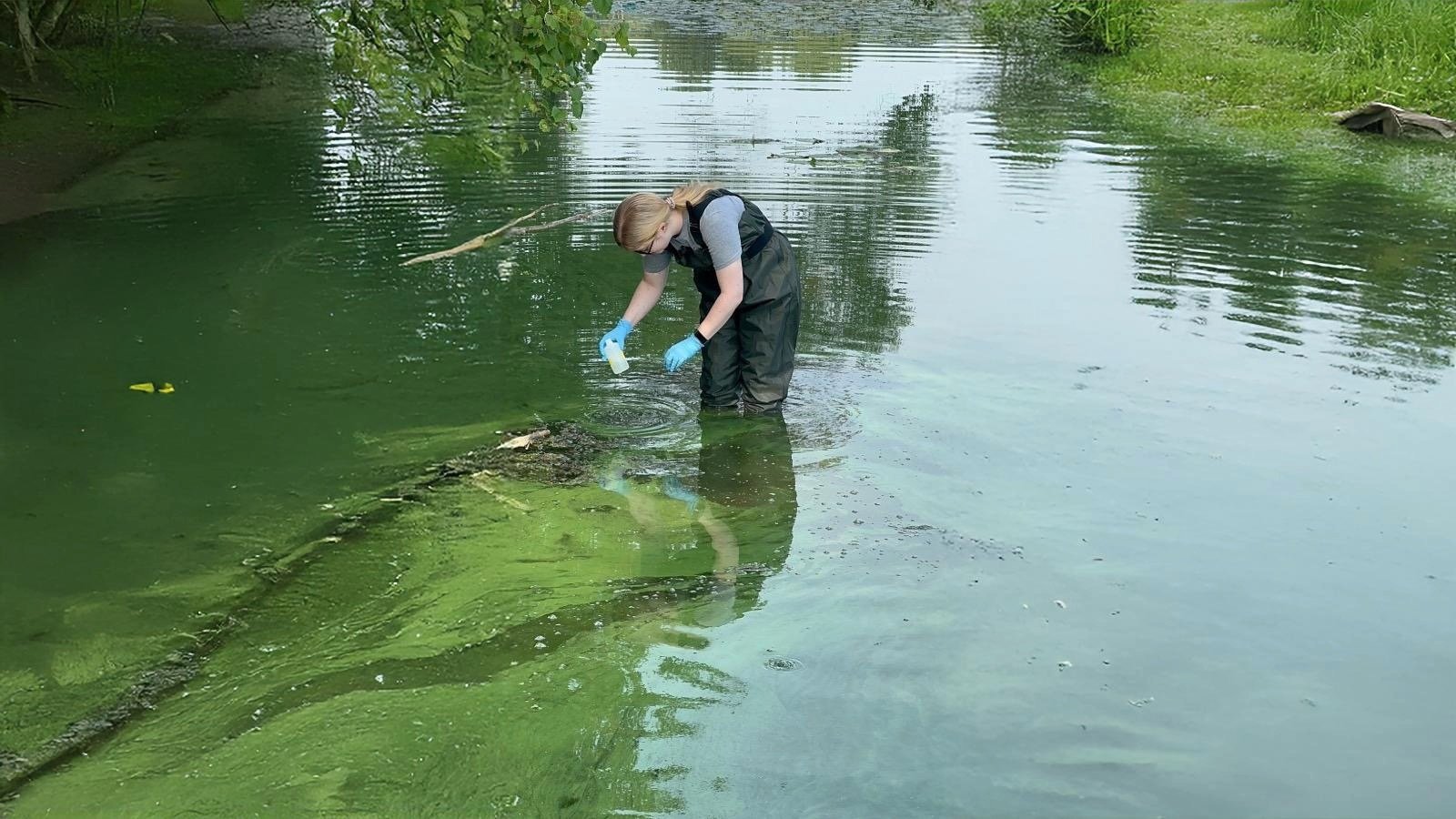 High levels of blue green algae in Lake Erie caused hundreds of thousands of people to temporarily have unavailable drinking water in 2014. This algae, formed during long periods of warm temperature, causes foul-smelling, discolored water, produces a toxin that is harmful to wildlife, livestock, and people, and continues to be a problem today.
Eric Petersen, Ph.D., a professor in the CMU College of Medicine is developing a sensor that will be able to detect blue green algae that is an issue in the Great Lakes. He was awarded a grant from the Pierce Cedar Creek Institute this past summer for his project “Development of a Bioluminescent Cyanotoxin Sensor for Water Monitoring”.
Petersen’s goal is to develop a low-cost way to test water samples for blue green algae. The current method is to send water samples out to a lab, but that is not only time consuming, with a turn-around time up to 14 days, it is expensive as well.
Petersen’s lab is attempting to make this sensor a reality by designing a protein that binds to the toxin. When bound by the toxin, the synthetic protein will react with an enzyme, creating light to alert researchers that the toxin is present in the sample. Currently Petersen is in the initial stages of creating a prototype for the sensor.
Petersen hopes to make it affordable for state and federal agencies and the average individual to test water samples using an inexpensive kit. Once they develop the technology, Petersen will assess the best way to manufacture the kit and get it into people’s hands so they can avoid exposure to toxins and ensure safe drinking water.