Now through October 31, we're waiving application fees for all freshman and transfer applicants!
*Common app code: Central27
Pre-Clerkship Years 1 and 2
Years 1 and 2 of our M.D. program curriculum enable students to
develop a solid foundation of medical knowledge, fundamental skills in
history taking and physical examination, and an appreciation of the
social, cultural and economic factors influencing day-to-day health
systems practice and patient care. Didactics in years 1 and 2 take place
on our Mount Pleasant campus, and benefit from modern facilities,
advanced learning technologies, and the extensive resources that a large
university like Central Michigan University has to offer.
The
design of the years 1 and 2 curriculum follows an integrated,
systems-based, and patient presentation approach. Students are guided to
develop their foundation of medical knowledge in the same manner that
they will need to apply their knowledge in practice. All traditional
disciplines, such as genetics, anatomy and biochemistry, are studied in
an integrated way; the same way a patient presents. This approach allows
students to more readily appreciate the relevance of foundational
medical knowledge in the practice of medicine, and to understand how
these traditional disciplines contribute to the understanding of patient
wellness and disease.
A new StAGES pre-clerkship curriculum will be implemented for our incoming class starting in the fall of 2024, with full implementation completed in the 2025-26 academic year. The Student-centered curriculum for Academic Growth, Engagement, and Success (StAGES) curriculum will provide students with a more thoughtful transition to medical school, improved alignment of content, and will utilize innovative, evidence-based teaching methodologies. Medicine is a team-endeavor, and so we promote this same approach to learning in our students’ educational environment. The curriculum places an emphasis on active learning in a team-atmosphere. Didactics are delivered using small-group clinical cases, team-based learning sessions, and peer instruction. From day one of the curriculum, students are required to engage in thoughtful discussion with faculty and peers, develop appropriate medical vocabulary, and use the wisdom of the team to find answers.
 The
Covenant HealthCare College of Medicine at Central Michigan University uses a holistic admissions process that values
commitment to service, leadership and breadth of experience. Not all
students come to medical school with common core knowledge. Therefore,
the curriculum begins with courses designed to introduce students to
normal human structure and the cellular and molecular principles of
medicine. These introductory topics allow students to develop an
understanding of medical sciences to a level that will allow them to
engage in the meaningful study of each of the body’s organ systems.
The
Covenant HealthCare College of Medicine at Central Michigan University uses a holistic admissions process that values
commitment to service, leadership and breadth of experience. Not all
students come to medical school with common core knowledge. Therefore,
the curriculum begins with courses designed to introduce students to
normal human structure and the cellular and molecular principles of
medicine. These introductory topics allow students to develop an
understanding of medical sciences to a level that will allow them to
engage in the meaningful study of each of the body’s organ systems.
Year 1 and 2 course sequences
Year 1
- Introduction to Human Structure: 6 weeks.
- Cellular and Molecular Principles of Medicine: 4 weeks.
- Hematopoietic, Lymphatic and Immune Systems: 5 weeks.
- Musculoskeletal and Integumentary Systems: 4 weeks.
- Urinary System: 4 weeks.
- Reproductive and Endocrine Systems: 9 weeks.
Year 2
- Neuro-Behavioral System: 10 weeks.
- Digestive and Excretory System: 6 weeks.
- Cardiopulmonary Systems: 4 weeks.
- Transition to Clerkships: 4 weeks.
Throughout
years 1 and 2, students are also enrolled in two longitudinal courses
that integrate across the first two years and horizontally integrate
with the systems courses.
- Essentials of Clinical Skills.
- Medicine and Society.
 Medicine and Society (MS) - integrates
population and public health concepts with individual and community
needs, health, and health care access, providing essential context for
ethical, cultural, legal and organizational concepts. Other MS topics
include foundational elements of professionalism, ethics, humanities,
and self-care in the medical profession.
Medicine and Society (MS) - integrates
population and public health concepts with individual and community
needs, health, and health care access, providing essential context for
ethical, cultural, legal and organizational concepts. Other MS topics
include foundational elements of professionalism, ethics, humanities,
and self-care in the medical profession.
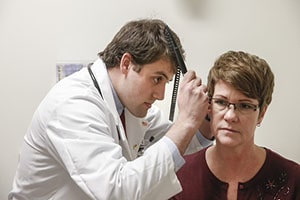
Essentials of Clinical Skills (ECS) – is
an integrated clinical, diagnostic, and therapeutic skill development
course using standardized patients. Emphasis is placed on
history-taking, physical examination, and diagnostic skills which all
align with the organ system being studied. ECS incorporates low and
high-fidelity simulation exercises where appropriate to emphasize
clinically relevant basic science concepts addressed in on-going organ
systems courses.
Other elements of ECS include:
Initial Clinical Experience (ICE) –
a longitudinal half-day clinical placement in a primary care practice
within the Mount Pleasant area. This experience allows students to apply
the skills learned in coursework and develop their comfort in clinical
settings. Students in ICE learn to become keen observers of the clinical
environment and the health care team from the patients’ perspective as
well as that of the health care team.
Interprofessional Education (IPE) – students engage in several unique interprofessional learning opportunities over the course of their 4 years of medical school. Including but not limited to, working with other health professional students in an active and engaging environment.
Interspersed between courses are a series of week-long experiences known as Bridge Weeks. These weeks serve as a means of providing dedicated time for student assessment, and the delivery of important curriculum components related to diversity, equity and inclusion, academic success, career advising, personal wellness and financial literacy. In addition, Bridge Weeks provide students with the opportunity to provide the college with feedback via evaluations of their curricular experiences that is used in the process of continuous quality improvement.
Pre-Clerkship Years 1 and 2 team