
Faculty Focus: Connecting Collaboration and Content
Author: Michael France, Learning Multimedia Producer, Office of Curriculum & Instructional Support
Mohammad Tauseef, MPharm, Ph.D., R.Ph., and Arun Agnihotri, M.D., joined the Covenant HealthCare College of Medicine at Central Michigan University in March and June 2026, respectively, and have been learning as much as they have been instructing ever since.
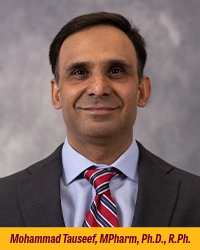
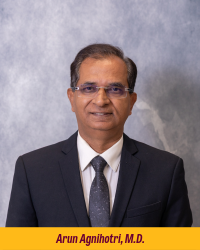
Tauseef is an Associate Professor of Pharmacology, while Agnihotri is a Professor of Pathology; despite their differing fields, they have leaned on one another as they adjust to a new teaching environment. Taking advantage of the Office of Curriculum & Instructional Support’s (CIS) instructional studios played a major role in that connection.
“[Tauseef] arrived before I did, so he was able to help me during my transition,” Agnihotri told CIS. “We often went to meetings together or explored new processes together. As I became more comfortable, I gained confidence in handling things independently, but having that support early on was very valuable.”
For Tauseef, working with Agnihotri was easy. He said teaching related content, having offices in close proximity (they are mere rooms apart), and going through similar experiences leading up to their arrival in Mount Pleasant were catalysts for “a strong friendship and a strong professional relationship.”
“We frequently discuss course content, learning objectives, slide design, assessment questions, and teaching strategies,” he said. “Because pathology and pharmacology are so closely connected, we need to communicate regularly. He’s teaching disease processes, and I’m teaching the medications to treat those diseases. […] Medical education is a team effort. Although each faculty member teaches specific content independently, we all share the same goal -- helping students become outstanding physicians who will serve their communities effectively.”
CIS 411 – Intro to course content creation
Both instructors are no strangers to video content. Agnihotri has worked in medical education around the world, including Antigua, St. Kitts, and Nevis, where he learned the importance of student feedback on course content. Tauseef, who shares a similar view on feedback, spent an extensive amount of time in industry working remotely. The COVID-19 pandemic—which struck while Tauseef was teaching at Chicago State University—kickstarted his education in creating high-quality video lectures via Zoom and other platforms.
Tauseef and Agnihotri knew that the nature of their complex subjects, which require meticulous attention to detail and engagement, demanded a quality to match. In July 2026, they scheduled an orientation with CIS to learn more about the possibilities at CMU. The instructional studios provided a setup unlike any they had ever encountered. Admittedly, it proved intimidating at first. Agnihotri said his first thought was, “How is this possible?” After a walkthrough with CIS, the apprehension quickly gave way to comfort. “It felt very natural,” Agnihotri said. “The environment gave me the feeling I was standing in a lecture hall delivering a live lecture. That immediately increased my confidence.”
Tauseef was taken by the amenities available to him. A multi-screen setup, quality video and audio, highlighting tools, annotation tools, and a laser pointer, along with a recording sign outside the studio to prevent any disruption, made the environs “pedagogically stress-free.” When it was time to record, Tauseef felt as though he had the same flexibility as he did in the classroom.
“I can connect my spoken explanation directly to the material on the slide,” he said. “This is especially important in pharmacology, where we work with complex diagrams showing drug mechanisms and biological pathways. I can circle important elements, reveal information gradually, emphasize key concepts, and revisit material as needed. […] I can see my presentation, monitor my recording, and interact with content in ways that simulate the classroom experience. While students are not physically present, the technology allows me to teach almost as if they were.”
Agnihotri agreed with Tauseef. “That feeling is what attracted me to the studio.”
Using feedback
Both instructors feel that student feedback is the No. 1 asset to creating successful learning outcomes with video content. Agnihotri said that his biggest piece of advice to any instructor would be to view any response as positive—even when it comes as a criticism. “After students watched some of my recordings, they mentioned that they had difficulty following certain drawings I was making during the presentation,” he said. “When I saw that feedback, I immediately thought how could I improve future recordings. Another example came from my first peer instruction session here. Some students sitting farther back in the room mentioned having difficulty following certain arrows or visual elements. Based on that feedback, I decided that future presentations should include larger images. Feedback provides valuable information.”
Tauseef teaches both first-year and second-year medical students. The stakes for quality material are especially high, as his content will be viewed by all 104 first-year students. “Quality, clarity, and delivery” are the essential questions for Tauseef. He tied it directly to his teaching philosophy.
Said Tauseef, “I have two core beliefs. First, I do not see them simply as students. I see them as future professionals. Second, my success is based entirely on their success. If my students succeed in medical school and throughout their careers, then I have succeeded. If a student struggles, I consider that my responsibility as well. I ask myself what I can do better to support them. […] Students are really our most important outcome.”
Access
Tauseef singled out student access as a critical factor in the successful outcomes of his studio-created content. He described his students' response as “trust in what they are viewing.”
“Students have told me that the recordings are smooth and easy to follow,” he said. “The flexibility is also very important. Students can increase playback speed, slow it down, pause difficult sections, rewind, and review specific concepts whenever necessary. They can study while sitting at their desk, eating breakfast, or relaxing at home. The content remains clear and accessible.”
Studio-produced content offers less room for distractions or technical problems compared to teaching virtually, said Tauseef. “Even in virtual meetings, we sometimes experience audio issues, frozen screens, or dropped connections,” he said. “Those problems do not occur in the recorded lectures. The editing process also allows me to ensure the lectures align closely with the learning objectives. When students arrive for class discussions and cases, they have already received a polished educational experience. Everything becomes seamless because the lecture serves as the foundation for the rest of the course. When that foundation is strong, everything else connects naturally.”
Philosophies on recording
CIS instructional studios strengthen the pedagogical and design process by helping faculty bring their authentic selves into their courses through recordings. CIS encourages instructors to consider their strengths before recording and strongly recommends reviewing and editing, but each instructor ultimately decides how the final product takes shape.
Tauseef and Agnihotri both strive for perfectionism. Their workflow is stark in contrast. The former learned to allow room for errors—and correction.
“During my first few sessions, I stopped and restarted recordings repeatedly because I wanted everything to be perfect in a single take,” Tauseef said. “At the time, I wasn’t thinking about editing. I believed I needed to deliver a flawless lecture from start to finish. Then [CIS] explained I could continue recording, pause when necessary, and edit afterward. After a few sessions, I felt completely stress-free. […] I didn’t need to restart every time I made a mistake.”
Unlike Tauseef, Agnihotri rarely edits his lectures. He said he typically doesn’t review the recordings, either. “Once a recording is finished, it’s finished,” he said.
Agnihotri attributes this mindset to experience gained beyond academia: performance arts. As a singer and stage performer, he is comfortable operating without a safety net. “When you’re performing live on a stage, there is only one take,” he explained. “There isn’t an opportunity to stop, restart, or edit afterward. Whatever happens on stage happens in that moment. I think of lectures the same way. When I finish recording, I consider the performance complete. Perhaps there is also a small fear involved.” “If I start reviewing every recording, I might begin finding small reasons to re-record portions, and that could become very time-consuming. So, my approach is simple: once it’s done, it’s done.”
This preference is not careless, however. It stems as much from Agnihotri’s background as it does from his approach to instruction and recording. “Everyone is different,” he said. “Just as students have different learning styles, instructors have different teaching styles. […] Everyone has different preferences and different concerns. For example, if I review my recordings, I may begin focusing on tiny details such as pauses or pronunciation. English is not my first language, so I might notice small things I would want to improve.“
“Major mistakes are different. If I were to make a major mistake in a lecture, I would recognize it immediately and address it right away. But minor imperfections don’t concern me. […] I am confident in my subject matter. My priority is delivering accurate content on time. Real life isn’t perfect. Teachers pause. Teachers think. People occasionally stumble over words. That’s part of authentic communication. Whether someone decides to edit extensively or leave things as they are should depend on what makes that instructor most comfortable.”
Tauseef and Agnihotri both singled out CMU’s culture as one of the most supportive places they have worked. With the support of one another and fellow faculty members, the transition from arrival to the development of effective course content, lectures, and peer instruction sessions has been nearly seamless. The focus can be right where the instructors want it: the students.
Visit CIS’s website for more information on Learning Media Production Services.